How Many Solar Panels Do You Need to Charge an Electric Car at Home?
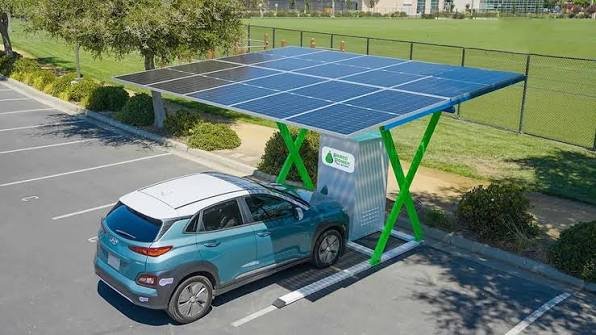
Electric cars can significantly reduce the money you spend on gasoline, but charging them still requires electricity. One way to reduce those charging costs is to install solar panels at home and use the electricity they generate to power your vehicle.
But how many solar panels do you actually need to charge an electric car? Is a small rooftop solar system enough, or do you need to cover most of your roof with panels? And can solar energy provide enough electricity to charge your car every day?
The answer depends on several factors, including how far you drive, how efficiently your EV uses electricity, the wattage of your solar panels, and how much sunlight your location receives.
For many drivers, a solar system with approximately 8 to 15 panels can generate enough electricity to cover a substantial portion, or potentially all, of their vehicle’s annual charging needs. However, drivers who travel long distances or live in areas with limited sunlight may need a larger system.
In this guide, we will explain how to calculate the number of solar panels required, estimate installation costs, explore different charging setups, and help you determine whether solar-powered EV charging makes sense for your home.
How Many Solar Panels Are Needed to Charge an Electric Car?
For a typical electric car driven around 10,000 to 12,000 miles per year, approximately 8 to 15 modern solar panels may be enough to generate the electricity needed for annual charging under suitable sunlight conditions.
This estimate assumes panels rated around 400 watts each and a reasonably productive solar installation. Your actual requirements may be different.
Here is a quick overview:
| Annual driving distance | Estimated annual charging electricity | Approximate 400-watt solar panels |
|---|---|---|
| 5,000 miles | 1,500–1,800 kWh | 4–7 panels |
| 8,000 miles | 2,400–2,900 kWh | 6–11 panels |
| 10,000 miles | 3,000–3,600 kWh | 7–14 panels |
| 12,000 miles | 3,600–4,300 kWh | 9–17 panels |
| 15,000 miles | 4,500–5,400 kWh | 11–21 panels |
| 20,000 miles | 6,000–7,200 kWh | 14–28 panels |
These are illustrative planning estimates, not guaranteed panel counts. They assume annual solar production of approximately 1,300 to 1,600 kWh per installed kW, with some variation to account for charging losses and different solar conditions.
A shaded roof, unfavorable panel orientation, or a cloudy climate may require additional panels. A sunny location with an efficient installation may need fewer.
It is also important to remember that these numbers cover the vehicle’s estimated electricity needs, not the electricity used by the rest of your home.
What Determines How Many Solar Panels You Need?
Several factors influence the size of the solar system required to charge an electric vehicle.
1. How Far You Drive Each Year
Your annual mileage is one of the most important factors.
Someone who drives 5,000 miles per year will generally need less solar electricity than someone who drives 20,000 miles.
For example, if you use your car mainly for short commutes and occasional shopping trips, a relatively small solar system may cover your charging needs.
On the other hand, if you have a long daily commute or regularly take road trips, you will need more electricity and potentially more panels.
Before choosing a system, estimate your typical annual mileage rather than basing your calculation on occasional long journeys.
2. Your Electric Car’s Energy Efficiency
Not all electric vehicles consume electricity at the same rate.
Smaller, efficient EVs generally use less energy per mile than large electric SUVs and pickup trucks.
For example:
- An efficient EV might use around 3 miles per kWh.
- A moderately efficient EV might achieve 3.5 miles per kWh.
- A larger or less efficient EV might use only 2.5 miles per kWh.
These are simplified examples. Actual efficiency varies with speed, temperature, driving style, tires, and vehicle design.
Suppose you drive 12,000 miles annually in a car that averages 3.5 miles per kWh.
Your estimated electricity consumption would be:
12,000 ÷ 3.5 = approximately 3,429 kWh per year.
Because some electricity is lost during charging, you should allow additional energy for the charging process. A practical initial estimate might be around 3,600 kWh annually, although your vehicle and charging equipment may differ.
3. The Wattage of Your Solar Panels
Solar panels come in different power ratings. Residential models commonly offer ratings in the hundreds of watts.
A higher-wattage panel can produce more electricity under the same conditions, potentially reducing the number of panels needed.
For example:
| Panel rating | Number of panels | Total solar capacity |
|---|---|---|
| 350 watts | 10 | 3.5 kW |
| 400 watts | 10 | 4.0 kW |
| 450 watts | 10 | 4.5 kW |
| 400 watts | 15 | 6.0 kW |
| 450 watts | 15 | 6.75 kW |
However, higher wattage does not automatically mean a better investment. Compare the installed cost, efficiency, warranty, physical dimensions, and available roof space before choosing a panel.
4. How Much Sunlight Your Home Receives
Solar panels generate different amounts of electricity depending on your location.
Homes in sunny regions may produce more energy per installed kilowatt than homes in areas with frequent cloud cover or shorter winter days.
Other factors include:
- Roof orientation and tilt.
- Nearby trees and buildings.
- Seasonal daylight hours.
- Local weather patterns.
- Dust, dirt, and shading.
- Inverter and wiring losses.
For example, a 5 kW solar system may produce substantially different annual energy totals in Arizona and New Jersey.
That does not mean solar EV charging is impractical in less sunny areas. It simply means the system should be sized using realistic local production estimates.
5. Charging Losses
The electricity drawn from your home’s electrical supply is not always identical to the energy stored in your car’s battery.
Some energy is lost through the vehicle’s onboard charging equipment, wiring, and other components.
For this reason, calculations based solely on the vehicle’s advertised battery capacity or driving efficiency may underestimate the amount of electricity you need to generate.
Use your utility’s charging consumption data when available, or include a reasonable allowance for charging losses in your estimate.
How to Calculate the Number of Solar Panels You Need
You can estimate the required solar capacity with a straightforward calculation.
Step 1: Estimate annual EV electricity consumption.
Divide your annual driving distance by your vehicle’s average miles per kWh, then account for charging losses.
Step 2: Estimate annual solar production.
Ask a solar installer for the expected annual output of a system at your property. You can also use a reputable solar production calculator to estimate output based on your roof and location.
Step 3: Divide annual EV consumption by annual production per kilowatt.
This gives you the approximate solar capacity required.
Step 4: Divide the required solar capacity by the wattage of each panel.
This gives you the approximate number of panels.
A Realistic Example
Imagine you drive 12,000 miles per year and your EV averages 3.5 miles per kWh.
Your estimated annual charging requirement, including an allowance for losses, is approximately 3,600 kWh.
Now assume your solar installation produces 1,300 kWh annually per installed kW.
The required solar capacity is:
3,600 ÷ 1,300 = approximately 2.77 kW.
If you choose 400-watt solar panels, the estimated number is:
2.77 ÷ 0.4 = approximately 7 panels.
Seven panels would represent a theoretical starting point for this example. In practice, you may choose a larger system to account for seasonal changes, less-than-ideal roof conditions, future driving needs, or additional household electricity consumption.
The calculation estimates annual energy, not whether the panels will produce enough electricity at the exact moment you plug in your car.
Can Solar Panels Charge an EV Every Day?
Yes, but there is an important distinction between generating enough electricity over a year and charging your car directly from solar power every day.
Solar production changes throughout the day. It is usually highest around midday and falls in the evening, while your vehicle may be parked at home overnight.
There are three common ways to handle this.
Option 1: Charge Directly During the Day
If your vehicle is parked at home during daylight hours, you can use solar electricity as it is generated.
A compatible smart EV charger can adjust its charging power according to available solar production.
This approach is particularly useful for people who work from home, have flexible schedules, or leave a second vehicle parked during the day.
It can also help you use electricity that might otherwise be exported to the grid for a relatively low credit.
Option 2: Use Solar Power and the Grid Together
This is often the simplest arrangement.
Your solar panels generate electricity during the day, while your home remains connected to the utility grid.
When solar production is sufficient, your EV can use the available solar electricity. When production falls short, the system can draw additional electricity from the grid.
This setup does not require a home battery and can provide reliable charging without making you depend entirely on the weather.
Option 3: Add a Home Battery
A home battery stores surplus solar electricity for use later.
For example, your panels may generate more electricity than your home needs in the afternoon. A battery can store some of that energy, allowing you to charge your vehicle after sunset.
However, batteries add upfront cost and lose some energy during charging and discharging.
If your utility offers inexpensive overnight electricity, charging from the grid may be cheaper than storing solar energy for later use. Compare the numbers before investing in a battery specifically for your car.
How Much Roof Space Do You Need?
The physical size of your solar installation matters just as much as its electrical capacity.
Many modern residential panels occupy approximately 18 to 23 square feet each, although dimensions vary by model.
Using that rough range:
| Number of panels | Approximate panel surface area |
|---|---|
| 6 panels | 108–138 sq. ft. |
| 10 panels | 180–230 sq. ft. |
| 15 panels | 270–345 sq. ft. |
| 20 panels | 360–460 sq. ft. |
| 25 panels | 450–575 sq. ft. |
These figures represent the panels themselves, not the total roof area required for installation. Setbacks, access paths, roof obstructions, and local building requirements can increase the space needed.
If your roof has limited usable area, a solar installer may recommend higher-wattage panels or another suitable mounting location.
Ground-mounted solar panels may be an alternative if you have enough property and local regulations permit installation.
How Much Does It Cost to Install Solar Panels for EV Charging?
The cost depends on system size, panel selection, installation complexity, local labor prices, and whether you already have solar panels.
For illustration, consider a new residential solar installation in the United States with an estimated installed cost of $2.50 to $4.00 per watt before incentives.
| Solar capacity | Approximate installed cost |
|---|---|
| 3 kW | $7,500–$12,000 |
| 4 kW | $10,000–$16,000 |
| 5 kW | $12,500–$20,000 |
| 6 kW | $15,000–$24,000 |
| 8 kW | $20,000–$32,000 |
These are broad planning estimates, not guaranteed current market prices. Local quotes may differ significantly.
The figures also describe the solar installation, not necessarily the complete EV charging setup. A home charging station, wiring, permits, electrical panel upgrades, or battery storage may add costs.
If your solar panels will also supply electricity to your home, it is misleading to treat the entire system cost as an expense for EV charging alone.
What If You Already Have Solar Panels?
If your home already has solar panels, you may not need to install any additional panels.
Start by checking how much surplus electricity your system generates and whether your inverter and electrical installation can support EV charging.
You may only need a suitable home charger, and potentially an upgrade to your electrical supply.
A smart charger that uses surplus solar power can be especially useful if your existing system frequently produces more electricity than your home consumes.
Is Charging an EV With Solar Panels Cheaper Than Grid Electricity?
It can be, but the savings depend on your electricity rates and the cost of your solar installation.
Consider an EV that requires 3,600 kWh annually for charging.
If your utility charges $0.20 per kWh, the annual electricity cost would be:
3,600 × $0.20 = $720.
If your home solar system supplies that energy, you could avoid purchasing some electricity from the grid. However, the solar electricity has a cost of its own because you paid to install the system and may have the option of exporting surplus power.
For example, if the electricity used to charge your car would otherwise have earned an export credit, that lost credit should be considered when calculating savings.
A useful comparison includes:
- The cost of installing the solar system.
- The value of electricity purchased from the grid that you avoid.
- Any export payments you give up by charging the vehicle.
- Maintenance and financing costs.
- Available incentives and their eligibility requirements.
- The expected lifetime of the panels and charging equipment.
Solar charging can reduce long-term energy expenses, but it is not automatically free after installation.
Should You Install Solar Panels Just to Charge an Electric Car?
Installing a solar system solely for EV charging may make sense for some households, but it is worth considering your broader electricity needs.
If you already plan to install solar panels for your home, adding enough capacity for your vehicle may be a sensible way to increase the value of the system.
If your only goal is to reduce EV charging costs, compare the total installation expense with the savings you expect from home charging using grid electricity.
For example, a driver who travels relatively few miles each year may not use enough electricity to justify a separate solar installation. A driver who covers substantial annual mileage and has high electricity costs may have a stronger financial case.
The best decision depends on your driving habits, roof conditions, local electricity prices, and how long you expect to remain in your home.
Common Mistakes to Avoid When Sizing a Solar EV System
Choosing the wrong system size can reduce savings or leave you with less charging capacity than you expected.
Here are several common mistakes to avoid:
- Ignoring annual mileage: Your charging requirements should reflect how much you actually drive.
- Using battery capacity instead of energy consumption: The size of the vehicle’s battery does not tell you how much electricity you will use over a year.
- Forgetting charging losses: Electricity drawn from the grid may exceed the energy stored in the battery.
- Assuming every panel produces the same amount of energy: Solar output varies by location, shading, and installation conditions.
- Ignoring household consumption: Your EV will compete with other appliances for the electricity your system generates.
- Expecting consistent production in every season: Winter output may be substantially lower than summer output.
- Buying a battery without calculating the benefit: Storage can increase costs without necessarily improving your financial return.
- Sizing the system only for current needs: Consider future mileage, a second EV, and potential changes in household electricity use.
A reliable solar installer should estimate annual production using your actual roof, local sunlight, and proposed equipment rather than relying only on a generic panel-count chart.
Frequently Asked Questions
Can I charge my electric car with just five solar panels?
Possibly, especially if you drive relatively few miles each year and live in a location with strong sunlight. Five 400-watt panels provide 2 kW of rated solar capacity, but the electricity they generate over a year depends on local conditions.
How many solar panels are needed for a Tesla?
The number depends on the specific Tesla model, its energy efficiency, and your annual mileage. An efficient model driven a moderate distance may require fewer panels than a larger vehicle driven many miles each year.
Use your vehicle’s actual energy consumption and local solar production estimates to calculate the required capacity.
Can I charge my EV with solar panels without a battery?
Yes. A battery is not necessary if your solar system is connected to the grid and your electrical equipment supports EV charging. The grid can supply additional power when solar production is insufficient.
Do solar panels work for EV charging in winter?
Yes, but output usually varies with daylight hours, weather, snow coverage, and shading. A system that generates plenty of electricity during summer may produce much less during winter.
Can I charge my car overnight using solar panels?
Not directly from panels that are no longer generating electricity. You can use stored energy from a compatible home battery or charge from the grid at night.
Will solar panels power both my house and my electric car?
Yes. Many residential solar systems can supply household appliances and EV charging simultaneously. The system must be appropriately sized for combined electricity demand, and grid electricity may still be necessary during periods of low solar production.
Final Thoughts
For many electric car owners, approximately 8 to 15 solar panels can provide a useful starting point for estimating the solar capacity needed to cover annual EV charging. The exact number depends on your driving distance, vehicle efficiency, panel wattage, and local sunlight.
If you drive around 12,000 miles per year, an efficient electric vehicle may require roughly 3,600 kWh of charging electricity annually. A solar installation of around 3 to 4 kW might cover that energy demand under favorable conditions, while less productive locations or higher driving distances may require a larger system.
Remember that generating enough electricity over a year does not mean your car will always charge directly from sunlight. You may need grid electricity or a home battery when solar production is low.
Before purchasing panels, estimate your annual charging consumption, obtain a realistic solar production assessment, and compare the total installation cost with your expected savings.
Ultimately, the right number of solar panels is the amount that meets your real driving needs, fits your property, and makes financial sense over the life of your solar system.