Solar Power vs. Wind Energy: Which Renewable Solution Fits Different Needs?
Introduction
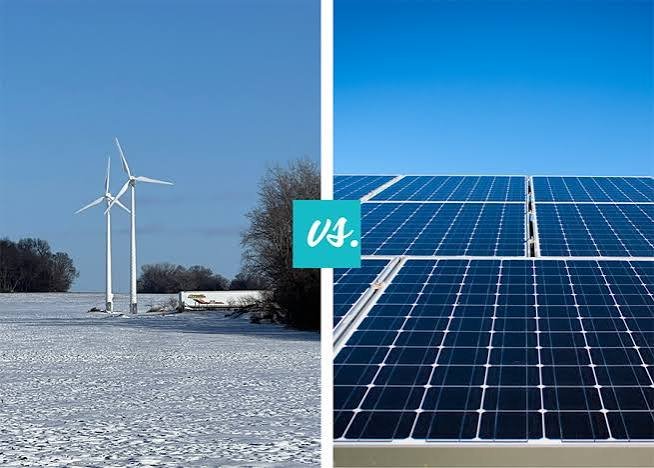
As the world moves toward cleaner and more sustainable energy sources, solar power and wind energy have become two of the most important alternatives to fossil fuels. Both technologies generate electricity from naturally replenished resources, reduce direct greenhouse gas emissions during operation, and help diversify energy supplies. However, they work in different ways, require different installation conditions, and offer distinct advantages depending on where and how they are used.
Solar power converts sunlight into electricity through photovoltaic panels, making it suitable for residential rooftops, commercial buildings, and large solar farms. Wind energy uses turbines to convert the movement of air into electricity, often producing substantial amounts of power in locations with strong and consistent winds.
Although both technologies support the transition to renewable energy, choosing between them is not always straightforward. A homeowner with a small roof may have different priorities from a farmer with open land or a utility company developing a large renewable energy project. Local weather, available space, installation costs, maintenance requirements, and electricity consumption all influence which option makes the most sense.
Understanding the differences between solar power and wind energy can help individuals, businesses, and communities make informed decisions. Rather than assuming one technology is always better, it is more useful to examine how each performs under different conditions and when combining both can deliver the greatest benefits.
What Is Solar Power?
<AsyncImageGroup query={[“residential rooftop solar photovoltaic panels sunny day”,”large utility scale solar farm photovoltaic panels aerial view”]} aspectRatio=”5:4″ layout=”bento” size=”lg”/>
Solar power is a renewable energy source that uses sunlight to generate electricity or heat. For electricity generation, the most common technology is the photovoltaic, or PV, panel.
Photovoltaic cells are made from semiconductor materials, typically silicon. When sunlight reaches these cells, it transfers energy to electrons, creating an electric current that can be used to power homes, businesses, and industrial equipment.
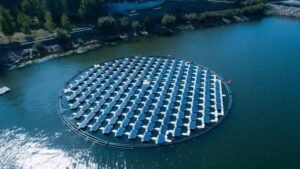
Solar installations come in several forms, including rooftop systems, ground-mounted solar farms, floating solar arrays, and building-integrated photovoltaic systems.
How Solar Power Works
A typical solar electricity system follows a relatively simple process.
- Solar panels absorb sunlight and generate direct-current electricity.
- An inverter converts that electricity into alternating current for ordinary household or business use.
- The electricity powers connected appliances and equipment.
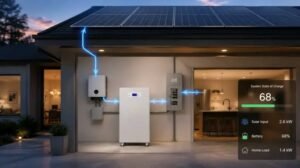
- Excess electricity may be exported to the grid or stored in a compatible battery system.
Solar panels generate electricity during daylight hours, with output depending on sunlight intensity, panel orientation, shading, temperature, and weather conditions.
Battery storage can help households use solar electricity after sunset, although batteries add cost and have their own capacity and efficiency limitations.
Main Advantages of Solar Power
Solar energy offers several practical benefits.
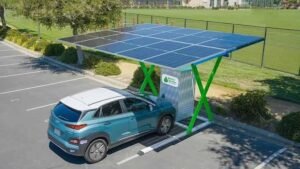
- Flexible installation: Panels can be installed on rooftops, carports, suitable land, and some building surfaces.
- Low routine maintenance: Solar panels generally have no moving parts, although inverters, electrical connections, and other equipment require inspection and eventual replacement.
- Scalable capacity: Systems can be designed for individual homes, businesses, or large electricity networks.
- Reduced operating emissions: Solar panels generate electricity without directly burning fossil fuels.
- Greater control over energy use: When paired with suitable storage, solar power can help households manage electricity consumption and reduce grid dependence.
Solar power is especially attractive for properties that receive good sunlight and have suitable roof or land space.
What Is Wind Energy?
<AsyncImageGroup query={[“large wind turbines on green rolling hills landscape”,”offshore wind farm turbines ocean aerial view”]} aspectRatio=”5:4″ layout=”bento” size=”lg”/>
Wind energy generates electricity by using turbines to capture the kinetic energy of moving air.
When wind passes over a turbine’s blades, it creates aerodynamic forces that rotate the rotor. This movement drives a generator, which converts mechanical energy into electricity.
Wind turbines are often installed in open plains, agricultural regions, mountain passes, coastal areas, and offshore locations where wind conditions are suitable.
Unlike solar panels, wind turbines can generate electricity during the day or at night, provided the wind is within the turbine’s operating range.
How Wind Energy Works
A typical wind energy system operates through several stages.
- Wind flows across the turbine blades and causes the rotor to turn.
- The rotor transfers mechanical energy through the turbine’s drivetrain or direct-drive system.
- A generator converts the mechanical energy into electricity.
- Power electronics and electrical equipment condition the electricity for delivery to the grid or a connected facility.
The amount of electricity produced depends on wind speed, turbine design, air density, and the site’s wind conditions.
Wind turbines generally operate within a defined range of wind speeds. They may not generate electricity when the wind is too weak, and they are usually shut down when wind speeds become dangerously high.
Main Advantages of Wind Energy
Wind power has several important strengths.
- Day-and-night generation: Turbines can produce electricity after sunset when wind conditions are favorable.
- High output at suitable sites: Modern utility-scale turbines can generate substantial quantities of electricity.
- Efficient use of agricultural land: In many wind farms, farming and grazing can continue around turbine locations.
- Offshore opportunities: Offshore wind farms can access strong winds in suitable marine areas.
- Complementary generation: Wind may produce electricity during periods when solar generation is low, depending on local weather patterns.
Wind energy is especially suitable for locations with strong, consistent winds and enough space to accommodate turbines and their associated infrastructure.
Solar Power vs. Wind Energy: Key Differences
Although both technologies produce renewable electricity, their performance and practical requirements differ.
| Feature | Solar power | Wind energy |
|---|---|---|
| Energy source | Sunlight | Moving air |
| Time of generation | Primarily during daylight | Day or night when wind conditions are suitable |
| Space requirements | Rooftops or suitable land | Open areas or suitable offshore locations |
| Weather dependence | Affected by clouds, shading, and daylight hours | Affected by wind speed and consistency |
| Moving parts | Solar panels generally have none | Turbines contain moving mechanical components |
| Routine maintenance | Generally relatively simple | Often more mechanically complex |
| Residential suitability | Common for suitable rooftops | Small turbines require careful site assessment |
| Large-scale applications | Solar farms and rooftop portfolios | Onshore and offshore wind farms |
| Storage requirements | Batteries can shift daytime energy into evening use | Storage or other grid resources can help manage variable output |
| Main site consideration | Sunlight and installation space | Wind resource, setbacks, and turbine siting |
Neither technology is automatically superior. The better option depends on local conditions, energy requirements, project costs, and how the electricity will be used.
1. Which Renewable Source Is More Efficient?
Efficiency is often used to compare energy technologies, but the term can refer to several different things.
For solar panels, efficiency usually describes the percentage of sunlight converted into electricity. For wind turbines, efficiency may refer to how effectively the turbine captures available wind energy or how much electricity it generates relative to its rated capacity.
Because solar panels and wind turbines use different energy sources, comparing their efficiency percentages directly can be misleading.
Solar Panel Efficiency
Solar panel efficiency indicates how much incoming sunlight becomes electrical power.
Higher-efficiency panels can generate more electricity from a limited roof or installation area. This is especially valuable for homes with small roofs or businesses seeking to maximize production from existing buildings.
However, a panel’s rated efficiency does not tell the whole story. Temperature, orientation, shading, and local sunlight determine how much electricity the system produces throughout the year.
Wind Turbine Performance
Wind turbine output is strongly influenced by wind speed. The energy available in moving air increases rapidly as wind speed rises, which means a relatively small difference in average wind conditions can substantially affect annual generation.
Modern wind turbines can produce large amounts of electricity at suitable sites, particularly where winds are strong and consistent.
However, a turbine installed in a sheltered or turbulent location may generate much less electricity than expected.
Which Performs Better?
There is no universal winner.
Solar may offer better practical performance on a sunny property with a suitable roof, while wind may be more productive at a location with an excellent wind resource.
For a fair comparison, evaluate expected annual electricity generation, installation costs, operating expenses, and lifetime output rather than relying on a single efficiency figure.
2. Installation Costs: Solar vs. Wind
The cost of installing a renewable energy system depends on its size, location, equipment, labor, permits, and connection to the electricity grid.
Solar Installation Costs
Residential solar is widely available because panels can often be installed on existing rooftops.
A typical system may require panels, an inverter, mounting equipment, electrical protection, and labor. Batteries and backup equipment increase the total cost if they are included.
Costs can also be affected by roof condition, shading, electrical upgrades, and local permitting requirements.
One advantage of solar is that homeowners can often start with a relatively small system and expand it later, provided the electrical design and available space support expansion.
Wind Installation Costs
Wind turbine projects generally require more specialized site assessment and engineering.
For residential systems, costs can include the turbine, tower, foundation, electrical equipment, installation machinery, permits, and maintenance arrangements.
A properly sized turbine also needs an appropriate wind resource. If a property is surrounded by buildings or trees that create turbulence, the installation may produce disappointing results.
Large utility-scale wind farms have different cost structures, including turbine procurement, roads, grid connections, and, for offshore projects, marine construction and specialized foundations or floating platforms.
Which Is More Affordable?
For many homeowners with suitable roofs, solar is the more straightforward and accessible choice.
Small wind systems may be attractive on rural properties with excellent wind conditions, but the tower, installation, maintenance, and permitting costs can make them less economical than expected.
The most reliable way to compare options is to obtain site-specific quotations and estimate the total cost per unit of electricity generated over the system’s lifetime.
3. Which Technology Is Better for Homes?
For most residential properties, solar panels are generally easier to install than wind turbines.
Rooftop solar can make use of existing building space without requiring a separate tower or a large open area. Systems can also be installed on carports or suitable ground-mounted structures.
When Solar Is a Good Choice
Solar power may be suitable if:
- Your roof receives substantial direct sunlight.
- You want a system that requires relatively little routine maintenance.
- Your property has limited open land.
- You want to reduce daytime electricity purchases.
- You may want to add a home battery later.
A solar installation can often be designed around a household’s electricity consumption and available roof area.
When Residential Wind Might Make Sense
Small wind turbines may be worth investigating if:
- You live in a rural area with strong and consistent winds.
- Your property has sufficient space for a suitable tower.
- Local rules permit the installation.
- Nearby buildings and trees do not create excessive turbulence.
- The expected energy output justifies the equipment and maintenance costs.
Wind turbines are not usually ideal for crowded residential neighborhoods. Mounting a turbine on a short rooftop mast does not guarantee good performance because buildings can create turbulent wind conditions.
For homeowners who want renewable electricity around the clock, a solar system combined with battery storage may be more practical than installing a small wind turbine, depending on the location and budget.
4. Solar vs. Wind for Businesses and Industries
Businesses often consume electricity throughout the day, but their energy needs vary by industry.
Warehouses, offices, shopping centers, factories, farms, and data centers may all benefit from renewable energy, although their operating schedules and power requirements differ.
Solar Power for Commercial Buildings
Commercial rooftops can provide substantial space for solar panels.
Businesses may use the electricity directly to power lighting, ventilation, computers, refrigeration, or manufacturing equipment.
Solar can be especially useful for facilities with high daytime electricity demand because much of the generated energy can be consumed immediately.
However, businesses that operate primarily at night may need battery storage, grid electricity, or another energy source to meet their full requirements.
Wind Power for Industrial Sites
Wind energy may be attractive for businesses located in areas with strong wind resources and sufficient space.
Agricultural businesses, industrial facilities, and energy-intensive operations may be able to purchase electricity from nearby wind projects or participate in larger renewable energy arrangements.
Installing an on-site turbine requires careful assessment of the wind resource, land requirements, noise, permitting, and maintenance costs.
Which Is Better for Businesses?
Solar may be a practical starting point for a business with a large, sunny roof and substantial daytime electricity use.
Wind may offer greater value for a business with access to a high-quality wind resource or an arrangement to purchase electricity from a wind farm.
Some businesses benefit from using solar and wind together to diversify electricity generation and reduce reliance on any single weather condition.
5. Environmental Impact: Which Is Greener?
Solar and wind power both have significantly lower direct operating emissions than electricity generated by burning fossil fuels.
However, neither technology is completely free of environmental impacts.
Environmental Benefits of Solar Power
Solar panels generate electricity without direct combustion emissions during operation.
They can be installed on existing buildings, parking structures, and some previously developed sites, potentially reducing the need to convert undeveloped land.
Nevertheless, manufacturing solar panels requires energy and raw materials. Large solar farms can also affect land use, habitats, and local drainage patterns if poorly designed.
Recycling and responsible disposal are important because solar modules contain materials that should be managed appropriately at the end of their service life.
Environmental Benefits of Wind Energy
Wind turbines generate electricity without directly burning fuel during operation.
Wind farms can coexist with certain agricultural activities, allowing some land to remain productive around turbine foundations and access roads.
However, wind projects can affect birds and bats, alter landscapes, and create noise concerns for nearby residents. Offshore projects also require careful consideration of marine habitats, fisheries, and construction impacts.
Appropriate turbine siting, wildlife monitoring, and operational measures can help reduce these effects.
Which Has the Lower Environmental Impact?
The answer depends on the location, project design, electricity generated over the system’s lifetime, manufacturing processes, and local ecological conditions.
Both technologies can provide substantial climate benefits when they replace higher-emission electricity generation.
The most responsible choice is the one that delivers useful renewable electricity while managing the environmental impacts specific to the project.
6. Reliability: Can Solar and Wind Provide Electricity All the Time?
One of the biggest differences between solar and wind energy is how their output changes over time.
Solar generation follows the availability of sunlight. Wind generation depends on changing wind speeds, which can vary during the day and across seasons.
Neither resource produces a constant amount of electricity under all weather conditions.
Solar Energy Reliability
Solar panels generate electricity during daylight hours, but output generally declines in the evening and may fall during heavy cloud cover.
Battery storage can shift some daytime electricity into the evening, but the amount available depends on battery capacity and how much energy the panels have generated.
During extended periods of poor sunlight, the system may still need electricity from the grid or another source.
Wind Energy Reliability
Wind turbines can generate electricity at night and during different seasons, provided wind speeds are suitable.
However, wind can become too weak for meaningful generation or too strong for safe turbine operation.
This variability means wind farms also need to operate within a broader electricity system that can balance supply and demand.
How to Improve Reliability
Electricity systems can combine renewable generation with batteries, transmission networks, flexible demand, hydropower, and other available generation resources.
For an individual property, a solar-plus-battery system may provide useful flexibility. For a utility, combining geographically diverse solar and wind projects can help reduce dependence on the weather at any single location.
The most reliable solution often involves a mix of technologies rather than expecting one renewable source to meet every demand by itself.
7. Can Solar and Wind Energy Work Together?
<AsyncImage query=”solar photovoltaic farm and wind turbines together renewable energy landscape” aspectRatio=”16:9″ width=”100%”/>
Yes. Solar and wind energy can complement each other, and combining them may produce a more balanced electricity supply.
Solar panels typically generate most of their electricity during daylight hours. Wind turbines can generate power at any time, and in some regions, stronger winds occur during the evening, overnight, or seasons when solar production is lower.
These patterns are not universal, but where they complement each other, a combined system can reduce fluctuations in total generation.
Benefits of Hybrid Renewable Energy Systems
A hybrid system may offer several advantages:
- More diverse electricity generation: Power can come from sunlight and wind rather than one resource alone.
- Better use of grid connections: Some projects can share infrastructure, subject to capacity and technical requirements.
- Potentially lower storage needs: Complementary generation patterns may reduce the amount of storage required for certain targets.
- More flexible energy planning: Operators can coordinate generation, storage, and electricity demand.
- Improved use of available land: Carefully planned projects may combine solar panels with turbines while allowing compatible agricultural or other land uses to continue.
However, combining technologies does not automatically make a project cheaper or more reliable. The weather patterns, equipment costs, electrical design, and required level of supply reliability must be assessed for each location.
8. Solar vs. Wind for Rural and Remote Areas
Rural and remote properties often have more space than urban homes, but they may also face limited grid access or higher costs for connecting to electricity infrastructure.
Both solar and wind can contribute to off-grid or partially independent power systems.
Solar for Remote Properties
Solar panels can be useful for remote homes, farms, cabins, and monitoring equipment.
They have relatively simple routine maintenance requirements and can be paired with batteries to provide electricity after sunset.
The main challenge is ensuring that the panels and battery provide enough energy during winter or extended cloudy periods.
Wind for Remote Properties
Wind turbines can be valuable where strong winds are available throughout the year.
They may generate electricity at night or during cloudy weather, complementing solar panels.
However, turbines require suitable installation space, structural foundations or towers, and ongoing mechanical maintenance.
The Best Option for Off-Grid Living
For some remote properties, a hybrid solar-and-wind system combined with battery storage can provide a more balanced energy supply than either source alone.
The right design depends on the seasonal energy demand, local sunlight, wind measurements, battery capacity, and the availability of backup generation.
A professional site assessment is especially important for off-grid systems because there may be no convenient grid connection when renewable generation is insufficient.
9. Maintenance and Lifespan
Maintenance requirements influence the total cost of owning a renewable energy system.
Solar Panel Maintenance
Solar panels generally have no moving parts, which reduces mechanical wear.
Routine care may include monitoring output, checking electrical connections, inspecting mounting equipment, and removing accumulated dirt when necessary.
Inverters and batteries have their own service lives and may need replacement before the panels themselves.
Solar panel performance gradually declines over time, so buyers should review the manufacturer’s performance warranty and expected degradation rate.
Wind Turbine Maintenance
Wind turbines contain moving components that experience mechanical loads during operation.
Maintenance may include inspecting blades, bearings, electrical systems, braking equipment, and tower structures.
Large turbines require specialized technicians and equipment, while small turbines may still need more attention than homeowners initially expect.
The service life of either system depends on product quality, installation, environmental conditions, and maintenance practices.
Which Requires Less Maintenance?
Solar panels generally require less routine mechanical maintenance because they do not have rotating blades or similar moving components.
Wind turbines can still be highly effective investments, but their mechanical complexity should be included when estimating lifetime costs.
10. How to Choose the Right Renewable Energy Solution
Choosing between solar power and wind energy begins with understanding the energy resource available at the property.
Before investing, consider the following factors.
- Local weather: Assess annual sunlight and wind conditions rather than relying on general regional averages.
- Available space: Determine whether you have a suitable roof, open land, or a location where a turbine can be installed safely.
- Energy consumption: Review how much electricity you use and when demand is highest.
- Installation budget: Compare equipment, installation, permitting, maintenance, and expected replacement costs.
- Grid connection: Consider whether the system will supply your property directly, export electricity, or operate off-grid.
- Storage requirements: Determine whether batteries are necessary to shift energy to evening hours or support essential loads.
- Local regulations: Check planning rules, height restrictions, noise requirements, setbacks, and relevant building or electrical codes.
- Environmental considerations: Review potential effects on habitats, nearby residents, and land or water use.
- Long-term financial value: Compare expected lifetime electricity generation and savings rather than focusing only on upfront cost.
A qualified installer or energy consultant can help estimate output and determine whether solar, wind, or a hybrid system is likely to meet your requirements.
The Future of Solar Power and Wind Energy
Both technologies are continuing to improve as manufacturers, researchers, and energy companies invest in more efficient equipment and better ways to manage renewable electricity.
Solar technology is advancing through improved photovoltaic cells, higher-efficiency modules, smarter inverters, and more affordable battery storage. These developments are helping solar systems generate more electricity and become easier to integrate into homes and businesses.
Wind energy is also evolving through larger turbine designs, improved blade materials, more sophisticated control systems, and advances in offshore technology. Floating offshore wind platforms may allow turbines to be installed in deeper waters where conventional foundations are less practical.
Artificial intelligence and digital monitoring are helping operators forecast generation, detect equipment problems, and coordinate renewable energy with electricity demand.
Energy storage and improved grid infrastructure will also be important. As solar and wind contribute a larger share of electricity generation, the ability to balance changing output with consumption becomes increasingly valuable.
The future energy system is therefore unlikely to rely on solar or wind alone. Instead, different renewable resources, storage technologies, and flexible electricity networks will work together to support reliable and lower-emission power.
Conclusion
Solar power and wind energy are both important solutions for reducing dependence on fossil fuels and building a cleaner electricity system. However, each technology has strengths that make it more suitable for particular locations and energy requirements.
Solar power is often the more practical option for homes and businesses with suitable rooftops, good sunlight, and limited installation space. It offers flexible system sizes and relatively simple routine maintenance.
Wind energy can be especially effective in locations with strong, consistent winds and enough room for suitable turbines. It can generate electricity at night as well as during the day, although its output remains dependent on weather conditions.
For larger projects and some remote properties, combining solar and wind can create a more balanced energy supply. Battery storage, grid connections, and other flexible energy resources can further improve how effectively the electricity is used.
Ultimately, there is no single renewable energy solution that fits every situation. The best choice depends on local resources, electricity demand, installation costs, environmental considerations, and long-term goals.
By evaluating these factors carefully, homeowners, businesses, and communities can select renewable energy systems that meet their needs while contributing to a more sustainable energy future.