Floating Solar Farms: Turning Lakes and Reservoirs Into Clean Power Sources
Introduction
As the demand for clean energy continues to grow, countries around the world are exploring new ways to generate electricity without consuming valuable land. Solar power has become one of the most widely adopted renewable energy sources, but large solar farms require considerable space. In densely populated regions, agricultural areas and urban centers, finding suitable land for new solar installations can be a major challenge.
Floating solar farms offer an innovative solution. Instead of placing solar panels on rooftops or open land, these systems install photovoltaic panels on specially designed floating platforms on lakes, reservoirs, and certain other bodies of water. By using existing water surfaces, floating solar installations can generate renewable electricity while reducing competition for land.
Also known as floating photovoltaic systems, or floating PV, these installations are attracting interest from energy companies, governments, and water utilities. They can make use of reservoirs near cities, industrial facilities, and hydroelectric power stations, potentially improving how existing infrastructure supports clean energy generation.
However, floating solar farms are not simply conventional solar panels placed on water. Their design requires careful consideration of anchoring, electrical safety, water quality, environmental effects, and changing weather conditions.
Understanding how floating solar technology works, what benefits it offers, and which challenges remain can help explain why it is becoming an important part of the global renewable energy conversation.
What Are Floating Solar Farms?
<AsyncImageGroup query={[“large floating solar photovoltaic farm reservoir aerial view”,”floating solar panels on artificial water reservoir clean energy installation”]} layout=”bento” aspectRatio=”5:4″ size=”lg”/>
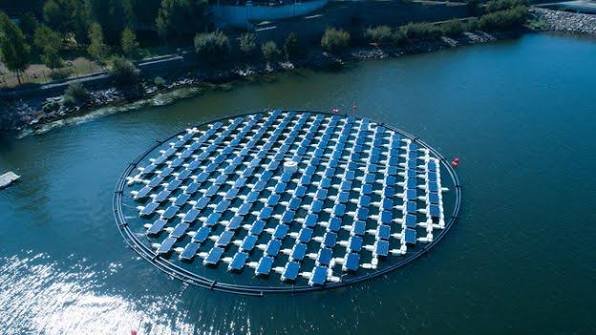
Floating solar farms are solar power installations built on floating structures that support photovoltaic panels above the surface of a body of water.
Unlike traditional solar farms, which use land-based mounting systems, floating installations rely on buoyant platforms that keep the panels above the water. These platforms are generally connected to anchoring and mooring systems designed to prevent excessive movement caused by wind, waves, and changes in water levels.
The panels convert sunlight into electricity in much the same way as conventional solar panels. The electricity is then transferred through electrical equipment and cables to an inverter or other power conversion system before being supplied to the grid or used by a nearby facility.
Floating solar installations are commonly considered for:
- Artificial reservoirs used for drinking water or irrigation.
- Hydroelectric reservoirs.
- Industrial water storage ponds.
- Certain wastewater treatment ponds.
- Other suitable, carefully assessed bodies of water.
Artificial reservoirs are particularly attractive because they may already have restricted public access, nearby electrical infrastructure, and established management systems.
Natural lakes and environmentally sensitive waterways require additional caution. Even when technically feasible, installing solar panels on these waters may create ecological concerns or conflict with recreational and conservation uses.
The goal is to identify water surfaces where solar electricity can be generated without creating unacceptable environmental or operational problems.
How Do Floating Solar Farms Work?
Although floating solar farms look different from land-based installations, their basic electricity-generation process is similar.
1. Floating Platforms Support the Solar Panels
The system begins with floating structures made from materials designed to withstand prolonged exposure to water and outdoor conditions.
These platforms support the solar panels and associated equipment while keeping them at an appropriate height above the water.
The materials and design depend on the project’s size, climate, water conditions, and expected operating life.
2. Anchoring and Mooring Keep the System in Position
A floating installation must remain stable despite changing water levels, wind, and waves.
Anchoring and mooring systems secure the platforms to suitable points on the reservoir bed, shoreline, or other engineered support structures.
Engineers must account for seasonal water-level changes, potential flooding, local wind conditions, and the forces created by the floating array.
Poorly designed mooring systems can create significant operational and safety risks, making this part of the installation especially important.
3. Solar Panels Generate Electricity
When sunlight reaches the photovoltaic cells, the cells convert solar energy into direct-current electricity.
The amount of electricity produced depends on several factors, including panel efficiency, sunlight intensity, temperature, shading, and system design.
Floating solar panels can sometimes perform more efficiently than comparable land-based panels because the surrounding water may help moderate temperatures. However, the size of this benefit varies by installation and environmental conditions.
4. Electrical Equipment Converts the Power
The electricity generated by the panels passes through electrical equipment and inverters, which convert it into the form required by the grid or the facility using the power.
Because the equipment operates near water, electrical insulation, grounding, cable protection, corrosion resistance, and safe maintenance access are essential.
The system must comply with applicable electrical and water-safety requirements.
5. Electricity Is Delivered to Users
Once converted, the electricity can be supplied to the grid, a nearby industrial facility, a water treatment plant, or other connected users.
Some floating solar farms are also paired with hydroelectric facilities, battery storage, or other energy infrastructure.
This combination can help make better use of existing grid connections and provide more flexibility in managing electricity supply.
Why Floating Solar Farms Are Gaining Popularity
The interest in floating solar power is driven by several challenges facing conventional renewable energy projects.
1. Limited Land Availability
Large solar farms require significant amounts of space. In densely populated areas, suitable land may be expensive, environmentally sensitive, or needed for agriculture and housing.
Floating solar installations offer another option by using selected water surfaces that may otherwise have limited use for energy generation.
This can be particularly valuable in regions where reservoirs and industrial water ponds are already available.
However, using water surfaces does not automatically eliminate land requirements. Floating projects still need access roads, electrical connections, maintenance facilities, and shore-based equipment.
2. Growing Demand for Renewable Electricity
Governments and businesses are increasingly looking for ways to reduce emissions from electricity generation.
Floating solar farms can add renewable electricity capacity without requiring every project to occupy a large area of land.
They can also be developed near existing infrastructure, potentially making them useful for utilities and industrial facilities seeking to diversify their energy sources.
3. Better Use of Existing Infrastructure
Many reservoirs are already connected to pumping stations, treatment facilities, or hydroelectric power plants.
Installing floating solar panels on suitable reservoirs may allow developers to make use of existing electrical connections and operational facilities.
This can sometimes simplify project development, although the actual cost advantage depends on the location, available grid capacity, and engineering requirements.
4. Potential Improvements in Solar Performance
Solar panels can become less efficient as their operating temperature rises.
Because floating panels sit above water, the surrounding environment may help moderate their temperature under certain conditions.
This can sometimes improve electricity generation compared with similar land-based systems.
Nevertheless, performance depends on panel design, wind exposure, water temperature, humidity, and local weather. Floating solar should not be assumed to outperform ground-mounted solar in every setting.
Major Benefits of Floating Solar Farms
Floating solar technology offers several potential advantages when projects are carefully planned and installed in suitable locations.
1. Conserving Valuable Land
One of the most important benefits is the ability to generate electricity without covering large areas of usable land with solar panels.
This can reduce competition between energy projects and other land uses, such as farming, housing, and conservation.
For densely populated countries and regions with limited developable land, this advantage can make floating solar especially attractive.
However, floating solar does not eliminate all environmental trade-offs. The water surface itself may support wildlife, recreation, or other important activities that must be considered before installation.
2. Potentially Higher Energy Output
The water environment may help reduce panel temperatures, particularly during hot weather and under suitable wind conditions.
Since photovoltaic efficiency can decline as cell temperatures rise, cooler operating conditions may improve performance.
The actual difference varies between projects, so developers need site-specific measurements and performance modeling to determine whether a floating installation offers a meaningful advantage.
3. Reduced Water Evaporation
Solar panels covering part of a reservoir can reduce the amount of sunlight and wind reaching the water surface. Depending on the design and local conditions, this may reduce evaporation from the covered area.
Water conservation can be particularly valuable in regions affected by drought or high evaporation rates.
For reservoirs used for irrigation or water supply, even a modest reduction in water loss may be worth investigating.
However, evaporation savings depend on the percentage of the water surface covered, weather conditions, water circulation, and other site characteristics. Large-scale coverage may also affect water temperature, oxygen levels, and ecological processes.
4. Combining Solar Power With Hydroelectric Generation
Floating solar farms can be installed on suitable hydroelectric reservoirs, creating opportunities to combine solar and hydropower generation.
Solar panels generate electricity during daylight hours, while hydropower operators may have some flexibility to adjust when water is released through turbines, subject to reservoir conditions and operational requirements.
This combination can help diversify renewable generation and potentially improve the use of existing transmission infrastructure.
It may also reduce pressure to develop entirely new sites for solar power.
However, hydropower cannot always be adjusted freely. Water availability, environmental flow requirements, flood control, irrigation, and electricity demand all affect how a reservoir is managed.
5. Supporting Energy Security
Floating solar can diversify a region’s electricity supply by adding another source of renewable generation.
Projects located near water treatment facilities, industrial sites, or existing power infrastructure may also supply electricity to important local operations.
When combined with battery storage or other generation sources, floating solar can form part of a more flexible energy system.
Solar power remains dependent on daylight and weather, so it is most effective when integrated into a broader electricity network that can manage changes in generation.
Floating Solar Farms and Water Conservation
<AsyncImage query=”floating solar panels covering section of drinking water reservoir aerial photograph” aspectRatio=”16:9″ width=”100%”/>
Water conservation is one of the most discussed potential benefits of floating solar technology.
Reservoirs can lose substantial amounts of water through evaporation, particularly in hot and dry climates. Wind and direct sunlight contribute to this process, although the amount of evaporation varies greatly between locations.
Floating solar panels may reduce evaporation by shading part of the water and changing local wind conditions near the surface.
How Solar Panels Help Reduce Evaporation
When panels cover a portion of a reservoir, less direct sunlight reaches the shaded water. The floating structures may also reduce air movement immediately above some covered areas.
These changes can reduce evaporation under certain conditions.
For regions that depend on reservoirs for drinking water, irrigation, or industrial use, reducing evaporation could provide an additional benefit alongside electricity generation.
Why Water Quality Still Matters
Covering a reservoir changes the environment beneath the floating panels.
Reduced sunlight may affect aquatic plants, while changes in water temperature and circulation can influence dissolved oxygen and other water-quality conditions.
These effects are not necessarily harmful in every setting, but they must be assessed carefully, especially when the reservoir supplies drinking water.
Projects should monitor relevant water-quality indicators and avoid assuming that reduced evaporation automatically means an overall environmental improvement.
Different Types of Floating Solar Installations
Floating solar systems can be designed in several ways depending on the body of water, project scale, and intended use.
<box gap={3}> <row align=start gap={3}> <AsyncImage query=”large modular floating photovoltaic solar farm on freshwater reservoir” aspectRatio=”4:3″ maxWidth=”124px”/> <box flex=”1″ gap={1}> <title size=”md”>1. Reservoir-Based Floating Solar</title> These installations are built on artificial reservoirs used for water supply, irrigation, or hydropower.
They are often attractive because the water body already has established infrastructure and controlled access. Careful design is still required to protect water quality and maintain safe reservoir operations. </box> </row> <divider color=”subtle”/> <row align=start gap={3}> <AsyncImage query=”floating photovoltaic panels on industrial wastewater treatment pond” aspectRatio=”4:3″ maxWidth=”124px”/> <box flex=”1″ gap={1}> <title size=”md”>2. Industrial and Wastewater Ponds</title> Some industrial facilities and wastewater treatment plants operate large water ponds that may be suitable for floating solar.
Generating electricity close to the facility can help offset operational energy consumption. The suitability of each site depends on water chemistry, maintenance access, and potential interference with treatment processes. </box> </row> <divider color=”subtle”/> <row align=start gap={3}> <AsyncImage query=”floating solar panels integrated with hydroelectric dam reservoir” aspectRatio=”4:3″ maxWidth=”124px”/> <box flex=”1″ gap={1}> <title size=”md”>3. Floating Solar With Hydropower</title> These projects combine floating photovoltaic arrays with existing hydroelectric infrastructure.
They may share some grid infrastructure and provide complementary electricity generation, although the operational and financial benefits depend on local conditions and system design. </box> </row> </box>
Offshore floating solar is also being explored in research and demonstration projects. However, the marine environment introduces additional challenges, including saltwater corrosion, stronger waves, storms, and complex mooring requirements. It should not be treated as equivalent to installing solar panels on a sheltered freshwater reservoir.
Real-World Applications of Floating Solar Power
Floating solar is no longer limited to experimental research. Commercial installations have been developed in several countries, although the scale and maturity of projects differ across markets.
China
China has developed large floating photovoltaic projects as part of its broader expansion of renewable electricity.
Some installations use artificial water bodies associated with former mining operations or other industrial activities. These projects demonstrate how certain existing sites can be repurposed for electricity generation.
The suitability of such locations still depends on water conditions, structural requirements, and the ability to connect the installation to the electricity grid.
Japan
Japan has explored floating solar as one way to address land constraints and make use of suitable reservoirs and other water surfaces.
The country’s experience also highlights the importance of engineering systems that can withstand local weather conditions, including strong winds and seasonal storms.
India
India has developed floating solar projects on reservoirs and other water bodies as part of its efforts to expand renewable electricity generation.
Large reservoirs can provide potential sites for projects near existing power infrastructure, although project feasibility depends on local water use, grid access, financing, and environmental assessment.
Southeast Asia
Countries across Southeast Asia have shown interest in floating solar, particularly where reservoirs, hydropower facilities, and growing electricity demand create opportunities for combined renewable energy projects.
The region’s warm climate and extensive water infrastructure can make floating solar worth considering, although tropical storms, humidity, and water management requirements must be addressed.
These examples illustrate that floating solar can be adapted to different environments. They do not mean every reservoir is suitable or that all projects will deliver the same financial or environmental benefits.
Challenges Facing Floating Solar Farms
Despite its advantages, floating solar technology has several challenges that developers must address.
1. Higher Installation Costs
Floating solar projects require specialized platforms, mooring systems, water-resistant electrical components, and installation methods designed for aquatic environments.
These additional requirements can make projects more expensive than comparable ground-mounted systems.
Savings from land use or existing electrical infrastructure may offset some of the additional costs, but this depends on the site.
2. Weather and Structural Risks
Floating solar farms must withstand wind, waves, changing water levels, and, in some locations, severe storms or ice.
Mooring systems must be designed to handle these conditions without damaging the platforms or placing excessive stress on electrical connections.
Extreme weather can also complicate maintenance and emergency access.
3. Electrical Safety
Combining electrical equipment with water requires careful planning.
Cables, connectors, grounding systems, inverters, and protection equipment must be selected and installed according to appropriate safety standards.
Inspection and maintenance procedures should account for the possibility of water exposure, corrosion, and difficult access.
4. Environmental Concerns
Floating solar installations can affect aquatic ecosystems by changing light levels, water temperature, oxygen availability, and local habitat conditions.
The extent of these effects depends on the size of the array, the proportion of water covered, the reservoir’s depth, and its existing ecological characteristics.
Environmental assessments should consider fish, aquatic plants, birds, and other wildlife where relevant.
Developers should also consider whether the installation could interfere with fishing, boating, water treatment, or other established uses.
5. Maintenance Difficulties
Accessing panels mounted on water can be more complicated than servicing ground-mounted solar equipment.
Workers may need boats, floating walkways, specialized safety equipment, or other access systems.
Cleaning, inspecting, and replacing components can therefore involve additional time and expense.
Designing the installation with safe maintenance access from the beginning can help reduce these challenges.
6. Corrosion and Material Durability
Floating systems are exposed to moisture and changing outdoor conditions. In certain environments, water chemistry and humidity can accelerate corrosion or degrade materials.
Manufacturers must select suitable floats, fasteners, cables, and protective coatings.
Regular inspections help identify deterioration before it creates more serious problems.
How Floating Solar Farms Compare With Ground-Mounted Solar
Both floating and ground-mounted solar farms can produce large amounts of renewable electricity, but they suit different circumstances.
| Feature | Floating solar | Ground-mounted solar |
|---|---|---|
| Land requirements | Uses suitable water surfaces | Requires suitable land |
| Installation | Needs floating platforms and mooring | Uses land-based mounting structures |
| Cooling effects | Water may moderate panel temperatures | Performance depends on air temperature, wind, and mounting |
| Water considerations | May affect evaporation and aquatic ecosystems | May affect soil, drainage, and terrestrial habitats |
| Maintenance access | Can require boats or floating walkways | Often easier to access |
| Main site limitations | Water use, depth, weather, anchoring, and ecology | Land availability, terrain, shading, and land-use conflicts |
There is no universal winner. A floating solar farm may be a strong option where suitable reservoirs are available and land is scarce. Ground-mounted solar may be simpler and more economical where land is readily available and environmental impacts are manageable.
The best choice depends on site-specific engineering, environmental, and financial analysis.
The Role of Technology in Improving Floating Solar
Technological improvements are helping developers make floating solar systems more reliable and easier to operate.
Smarter Monitoring Systems
Sensors and monitoring software can track electricity generation, equipment performance, water levels, and certain environmental conditions.
These tools can help operators detect abnormal output, identify equipment problems, and schedule maintenance more effectively.
Improved Floating Materials
Manufacturers continue to develop floating structures designed to resist ultraviolet radiation, moisture, and mechanical stress.
More durable materials can help extend service life and reduce maintenance requirements, provided they are appropriately selected for the operating environment.
Artificial Intelligence and Predictive Maintenance
AI-assisted systems can analyze operational data to identify patterns that may indicate declining performance or developing faults.
Predictive maintenance can help operators investigate problems before they cause major interruptions.
However, AI tools work best when combined with reliable sensors, accurate data, and qualified human oversight.
Integration With Battery Storage
Batteries can store excess solar electricity for use when generation decreases.
For floating solar farms, storage may help improve the usefulness of the electricity produced, especially when connected to facilities with changing demand.
The financial value of storage depends on battery costs, electricity prices, grid conditions, and how frequently the stored energy can be used.
How Floating Solar Can Support Sustainable Development
Floating solar has the potential to contribute to several wider sustainability goals, including clean energy generation, responsible water management, and more efficient use of existing infrastructure.
In areas where water reservoirs and renewable energy facilities are already present, a carefully designed floating installation may provide additional electricity without converting large areas of land.
Projects can also create employment in engineering, manufacturing, construction, maintenance, and environmental monitoring.
However, these benefits depend on responsible planning. A project that generates renewable electricity but harms a critical water supply or sensitive ecosystem may create unacceptable trade-offs.
Sustainable development therefore requires more than measuring electricity output. It also involves assessing environmental effects, consulting relevant communities, maintaining water quality, and ensuring that local needs are considered.
The Future of Floating Solar Farms
The future of floating solar will depend on improvements in engineering, costs, environmental monitoring, and project development.
As solar technology becomes more affordable, floating systems may become increasingly attractive for reservoirs and industrial water bodies where conventional land-based installations face limitations.
Combining floating solar with hydroelectric generation, battery storage, and smart grid systems could also help make better use of existing energy infrastructure.
At the same time, researchers and developers will need to improve the durability of floating platforms, reduce installation and maintenance costs, and understand the long-term ecological effects of covering portions of water surfaces.
Not every lake or reservoir should become a solar farm. Instead, projects should be directed toward locations where the energy benefits are meaningful and the effects on water use, wildlife, and local communities can be managed responsibly.
With careful planning, floating solar could become a useful addition to the wider mix of renewable energy technologies.
Conclusion
Floating solar farms offer an innovative way to generate clean electricity by turning suitable lakes, reservoirs, and industrial water bodies into sources of renewable power.
By using existing water surfaces, these systems can reduce pressure on land resources, potentially improve solar panel performance, and, under certain conditions, help reduce water evaporation. When combined with hydroelectric infrastructure or battery storage, floating solar may also contribute to a more flexible electricity system.
However, the technology comes with important challenges, including higher installation costs, structural demands, electrical safety, maintenance access, and possible effects on aquatic ecosystems.
Successful projects require careful site selection, reliable engineering, environmental monitoring, and long-term maintenance planning.
As the demand for clean electricity continues to rise, floating solar farms could play an increasingly valuable role in the global energy transition. Their greatest potential lies in making productive use of suitable water surfaces while balancing renewable energy generation with the protection of water resources and the natural environment.