Can You Charge an Electric Car With Solar Panels? Costs, Benefits, and Setup
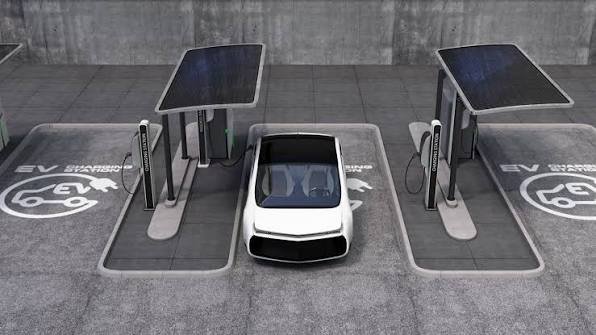
Electric vehicles are becoming increasingly popular among people who want to reduce fuel costs and make their daily travel more environmentally friendly. At the same time, solar panels are helping homeowners generate their own electricity instead of relying entirely on the power grid.
Combining these two technologies sounds like a natural fit. Imagine parking your electric car at home, plugging it in, and using sunlight to power your next journey. Instead of paying for every unit of electricity from your utility company, you could generate at least some of the energy your vehicle needs directly from your rooftop.
But can you really charge an electric car with solar panels? How many panels would you need, how much would the setup cost, and is it worth the investment?
The short answer is yes. You can charge an electric car using solar energy, and for many homeowners, it can be a practical way to reduce charging expenses. However, the results depend on your driving habits, local sunlight, electricity prices, roof space, and the charging equipment you choose.
In this guide, we will explain how solar EV charging works, estimate the number of panels required, explore the costs and benefits, and walk through the process of setting up a home solar charging system.
Can You Charge an Electric Car With Solar Panels?
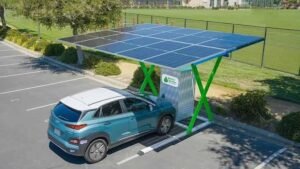
Yes, you can charge an electric vehicle using electricity generated by solar panels. The most common approach is to install a rooftop solar system and connect it to a home EV charger.
During daylight hours, your solar panels generate electricity. That electricity can power household appliances, charge your EV, or be sent to the grid if your system produces more than you need.
When your panels generate enough electricity, your car can use the solar energy directly. If solar production falls short, the remaining electricity can come from the grid or a home battery, depending on how your system is configured.
For example, if your solar panels produce 6 kilowatts of electricity at midday and your household is using 2 kilowatts, approximately 4 kilowatts may be available for EV charging, assuming the system and charger support that arrangement.
Actual power available for charging will change throughout the day as sunlight and household demand fluctuate.
One important point is that ordinary rooftop solar panels do not usually connect directly to an electric car. You need compatible electrical equipment to convert the electricity into a form your home and vehicle can use safely.
How Does Solar EV Charging Work?
A home solar EV charging system combines several components to turn sunlight into usable energy for your vehicle.
1. Solar Panels Generate Electricity
Solar panels convert sunlight into direct current (DC) electricity.
The amount produced depends on the panels’ capacity, sunlight intensity, weather, roof orientation, shading, and installation angle.
A solar system rated at 6 kW, for example, can produce up to approximately 6 kW under suitable conditions, but actual output will often be lower and will vary throughout the day.
2. An Inverter Converts the Electricity
Most residential solar systems use an inverter to convert the panels’ DC electricity into alternating current (AC) for household use.
Your home appliances and many standard home EV chargers operate using AC electricity.
Some systems use hybrid inverters that can also manage battery storage and coordinate energy flows between the solar panels, home, battery, and grid.
3. A Home EV Charger Supplies Power to the Vehicle
A home EV charging station, often called an EVSE, provides a safe connection between your home’s electrical supply and your vehicle.
The charging equipment communicates with the car and manages the charging process according to supported electrical limits and safety requirements.
A compatible smart charger may also adjust its charging rate based on available solar power, helping you use more of the electricity your panels generate.
4. Your Car Stores the Energy in Its Battery
The vehicle’s onboard charging equipment converts incoming AC electricity into DC electricity for the battery.
The energy is stored until you need it for driving.
Some vehicles support additional charging arrangements, but compatibility varies. Most homeowners can use an ordinary AC home charger with a solar installation.
5. The Grid or Battery Fills the Gaps
Solar production is not constant. Clouds, evening hours, winter weather, and household electricity use can all reduce the energy available for charging.
A grid-connected system can draw additional electricity from the utility when necessary.
A home battery can store excess solar energy during the day and make it available later, although adding storage increases the system’s upfront cost.
How Many Solar Panels Do You Need to Charge an Electric Car?
The number of solar panels required depends on how much you drive, your vehicle’s efficiency, panel capacity, and the amount of sunlight your location receives.
A useful starting point is to estimate your vehicle’s annual electricity consumption.
Suppose you drive 12,000 miles per year and your EV consumes an average of 3.5 miles per kWh.
Your estimated annual electricity use would be:
12,000 miles ÷ 3.5 miles per kWh = approximately 3,430 kWh per year.
Your actual electricity consumption from the wall will be somewhat higher because charging involves energy losses.
For planning purposes, you might estimate around 3,600 kWh annually.
Now suppose your location receives an average of 4.5 peak sun hours per day, and your solar system achieves a performance ratio of 0.8 after accounting for system losses.
A 1 kW solar installation could generate approximately:
1 kW × 4.5 hours × 365 days × 0.8 = 1,314 kWh per year.
To produce approximately 3,600 kWh annually, you would need around:
3,600 ÷ 1,314 = 2.74 kW of solar capacity.
In this example, a system of approximately 3 kW could generate enough electricity annually to cover the estimated energy needs of the car. However, seasonal variations, charging losses, and household electricity demand may mean that a larger system is more practical.
Example: Estimated Solar Panels Required
<text color=”secondary” size=”sm”>Illustrative estimates using 400-watt solar panels. Actual production varies by location and installation.</text>
| Solar system size | Approximate number of panels | Potential annual generation at 1,314 kWh per kW |
|---|---|---|
| 3 kW | 8 panels | 3,942 kWh |
| 4 kW | 10 panels | 5,256 kWh |
| 6 kW | 15 panels | 7,884 kWh |
| 8 kW | 20 panels | 10,512 kWh |
| 10 kW | 25 panels | 13,140 kWh |
These figures are examples, not guaranteed production levels. A shaded roof in a cloudy region may generate considerably less electricity than an unshaded roof in a sunny climate.
Also, solar generation and EV charging demand do not necessarily occur at the same time. Producing enough electricity over a year does not automatically mean you can charge the car entirely from solar energy every day.
Can Solar Panels Charge an EV at Night?
Solar panels do not generate electricity at night, so you need another source of energy if you want to charge your car after sunset.
There are three main options.
Option 1: Use the Electricity Grid
The simplest approach is to charge your vehicle using grid electricity at night.
Your solar panels can offset some of your home’s total electricity consumption during the day, even if the car charges later.
Depending on your utility’s billing rules, the value of solar electricity exported to the grid may differ from the price you pay to import electricity.
This option is often the least expensive because it avoids the upfront cost of a home battery.
Option 2: Install a Home Battery
A home battery stores surplus solar electricity during the day and makes it available at night.
For example, if your solar panels produce more electricity than your home needs at midday, the excess can charge the battery. You can then use that stored energy to charge your EV after sunset.
However, the battery must have sufficient usable capacity, and some energy is lost during charging and discharging.
A battery large enough to supply a significant amount of EV charging may be expensive, especially if you want to charge a large vehicle battery regularly.
Option 3: Charge During Daylight Hours
If your car is parked at home during the day, you can schedule charging to coincide with solar production.
This approach may let you use more solar energy without purchasing a battery.
It works particularly well for people who work from home, have flexible schedules, or leave their vehicles parked during daylight hours.
For many homeowners, adjusting charging times is the simplest way to improve the economics of solar EV charging.
What Equipment Do You Need for Solar EV Charging?
You do not necessarily need a complicated setup to charge an electric vehicle with solar energy. The equipment required depends on whether you already have solar panels and whether you want basic charging or more advanced energy management.
1. Solar Panels
Solar panels generate the electricity needed for charging.
Your system should be sized around both household electricity consumption and EV charging demand rather than considering the car alone.
If you already have a solar installation, you may be able to use it without adding panels, provided it has sufficient capacity and your electrical setup supports the additional load.
2. Solar Inverter
The inverter converts the panels’ DC output into usable AC electricity for your home and compatible EV charger.
If you are installing a new system, choose an inverter that is appropriate for the system’s size and supports any battery or energy management features you plan to use.
3. Home EV Charger
A dedicated home EV charger is generally the most convenient option for regular charging.
In North America, Level 2 chargers commonly use a 240-volt supply. In many other regions, home charging equipment operates on local single-phase or three-phase electrical supplies.
Charging speed depends on the vehicle, charger rating, circuit capacity, and electrical installation.
A qualified electrician should confirm that your home’s electrical supply can safely support the charger.
4. Smart Charging Controller
A solar-compatible smart charger can monitor energy production and adjust charging power to make better use of surplus solar electricity.
Depending on the equipment, you may be able to select between different modes, such as:
- Solar-only charging.
- Solar charging supplemented by grid electricity.
- Scheduled charging during lower electricity tariffs.
- Charging at a fixed power level when you need the car ready quickly.
Not every charger supports all these features, so check compatibility before buying.
5. Home Battery (Optional)
A battery is useful if you want to store excess solar energy for later use.
However, it is not essential for solar EV charging. A grid-connected solar system can charge a vehicle directly when sufficient sunlight is available.
6. Monitoring and Energy Management Software
Monitoring tools help you understand how much electricity your panels generate, how much your household uses, and how much energy goes into your car.
Some systems combine solar production, battery storage, home consumption, and EV charging into one dashboard.
This information can help you schedule charging and identify whether your solar installation is meeting your expectations.
How Much Does It Cost to Charge an Electric Car With Solar Panels?
The cost depends on whether you already have solar panels, how much additional capacity you need, the type of charger you choose, and local installation prices.
There is no single price that applies to every home.
Solar Panel Installation Costs
For an existing solar installation, the cost of adding EV charging may be relatively modest if your electrical system can support the charger and you do not need additional solar capacity.
If you are starting from scratch, the investment will be higher because you need the solar panels, inverter, mounting equipment, wiring, permits where applicable, and installation labor.
As an illustrative U.S. planning range, a residential solar installation may cost roughly $2.50 to $4.00 per watt before incentives, although actual quotes can fall outside this range.
Using that range:
| Solar system size | Illustrative installed cost before incentives |
|---|---|
| 3 kW | $7,500–$12,000 |
| 5 kW | $12,500–$20,000 |
| 8 kW | $20,000–$32,000 |
| 10 kW | $25,000–$40,000 |
These are broad estimates for illustration, not current quotes or guaranteed market prices. Location, roof complexity, equipment, labor, and local regulations can significantly affect the final cost.
If the system will also power your household, you should not attribute its entire cost to EV charging alone.
Home EV Charger Costs
A home charger adds another expense.
For planning purposes, a basic residential Level 2 charging unit might cost a few hundred dollars, while installation can add several hundred to more than a thousand dollars depending on wiring distance, panel capacity, and other electrical work.
Smart chargers with solar integration may cost more than basic models.
Ask the installer to provide separate prices for the charger, electrical work, permits, and any required upgrades.
Home Battery Costs
A home battery can increase the total project cost substantially.
The final price depends on usable capacity, power output, installation requirements, inverter compatibility, and whether backup power is included.
Before purchasing one specifically for EV charging, compare the value of storing solar energy with the alternative of charging during daylight or using inexpensive grid electricity at night.
Is Charging an Electric Car With Solar Panels Cheaper?
It can be, especially if you have suitable roof space, reasonable installation costs, and high electricity prices.
However, the financial benefit depends on what you would otherwise pay for charging and what you could earn or save by using solar electricity elsewhere.
Consider a simple example.
Suppose your electric car uses 3,600 kWh of electricity annually for charging, and your utility electricity rate is $0.20 per kWh.
Your annual charging cost would be:
3,600 kWh × $0.20 = $720.
If you could supply all that energy with solar electricity that would otherwise have been exported for $0.07 per kWh, the value of the electricity used for charging would be approximately $252 per year in foregone export credits.
The difference between paying $720 for grid electricity and giving up $252 in export value would be approximately $468 annually.
This is an illustrative example, not a guaranteed saving. It assumes the same amount of useful energy, excludes installation and maintenance costs, and does not account for financing, incentives, or changes in electricity rates.
If the solar electricity would otherwise have been wasted because the system was producing more than the home could use or export, its value for charging could be higher.
The key point is that solar electricity is not always economically free. Its value depends on installation costs and what you could otherwise do with the energy.
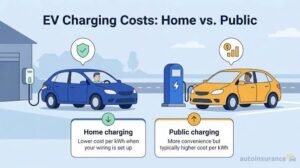
Solar Charging vs. Grid Charging: Which Is Better?
Both options have advantages, and the right choice depends on your electricity tariff, solar availability, and driving routine.
| Factor | Solar charging | Grid charging |
|---|---|---|
| Electricity cost | Can be low after installation, but depends on solar system costs and export value | Depends on local electricity rates and tariffs |
| Environmental impact | Often reduces reliance on grid electricity and can lower emissions | Depends on the electricity generation mix |
| Availability | Depends on sunlight unless combined with storage or grid power | Available whenever the grid is operating and the charger is accessible |
| Upfront investment | May require solar panels, a compatible charger, and possibly a battery | Often requires only suitable charging equipment |
| Charging flexibility | Best when charging can follow solar production | Can be scheduled around off-peak rates |
| Energy independence | Can improve independence from the grid | Depends on utility supply |
| Maintenance | Solar equipment and optional batteries need maintenance over time | Charging equipment needs maintenance, but no solar system is required |
For many households, a combination works best: use solar power when it is available and grid electricity when you need to charge outside daylight hours.
Benefits of Charging an EV With Solar Panels
Solar EV charging offers several advantages beyond reducing the amount of electricity you purchase from your utility.
1. Lower Long-Term Charging Costs
Once a solar system is installed, the electricity it generates can help reduce the cost of charging your vehicle.
The amount you save depends on how much solar electricity you can use, your utility’s rates, and the cost of installing the system.
2. Reduced Dependence on the Grid
Generating electricity at home gives you another source of energy for your vehicle.
If you add a suitable battery and compatible backup equipment, you may also be able to use stored energy during certain grid outages. However, ordinary grid-connected solar inverters generally shut down during an outage unless the system is specifically designed to operate safely in backup mode.
3. Lower Environmental Impact
Solar power produces electricity without direct emissions during operation.
Using solar electricity for your EV can reduce your reliance on electricity generated from fossil fuels. The actual emissions benefit depends on your local grid, the solar equipment’s lifecycle impacts, and how much grid electricity your charging still requires.
4. Better Use of Your Solar Installation
If your panels regularly generate more electricity than your household consumes, charging your EV can increase the amount of solar energy you use directly.
This may be particularly valuable where exported electricity receives a low credit.
5. Greater Control Over Energy Use
Smart charging equipment can help you coordinate charging with solar production, household demand, and electricity tariffs.
Over time, monitoring your energy flows can make it easier to manage your household’s overall electricity use.
Challenges and Limitations to Consider
Despite the benefits, solar EV charging is not automatically the best choice for every homeowner.
1. High Initial Cost
Installing solar panels, a home charger, and a battery can require a substantial upfront investment.
If your current electricity rates are low or you rarely drive, the financial payback may take longer than expected.
2. Weather and Seasonal Changes
Solar production varies with cloud cover, daylight hours, season, and location.
A system that produces enough energy for your car in summer may generate considerably less during winter.
3. Limited Roof Space
Smaller roofs may not have enough suitable area to generate all the electricity required by your home and vehicle.
Roof orientation, shading, structural conditions, and local installation rules can also affect system size.
4. Charging Schedule Restrictions
If you commute during the day and only park at home after sunset, using solar electricity directly may be difficult.
A home battery can help, but it adds cost and energy losses.
Alternatively, you can use solar electricity to power your household during the day and charge your vehicle from the grid at night.
5. Electrical Upgrades
Older homes may need panel upgrades, additional wiring, or other electrical work before installing a higher-powered charger.
These costs should be considered when comparing installation quotes.
6. Battery Storage Is Not Always Economical
A battery can increase solar self-consumption, but the cost of storing electricity may be higher than the benefit you receive from using it later.
Compare battery pricing, usable capacity, efficiency, warranties, and the value of exported electricity before making a decision.
How to Set Up a Solar EV Charging System at Home
If you want to charge your electric vehicle with solar panels, follow a step-by-step approach rather than buying equipment first.
Step 1: Calculate Your EV’s Electricity Needs
Estimate your annual mileage and the vehicle’s typical efficiency.
For example, if you drive 10,000 miles annually and your EV uses 3.5 miles per kWh, you will need approximately 2,857 kWh of energy for driving before accounting for charging losses.
Your actual consumption will depend on speed, climate, driving style, vehicle size, and other factors.
Step 2: Review Your Existing Solar System
If you already have panels, check their rated capacity and review actual electricity production.
Compare solar generation with your household demand and determine whether sufficient electricity is available for charging.
A solar installer can help assess whether additional panels or a different inverter configuration would be worthwhile.
Step 3: Choose the Right Home Charger
Select a charger that is compatible with your vehicle and electrical supply.
If you want to maximize direct solar use, look for equipment that supports dynamic charging adjustments based on available solar power.
Confirm whether the charger is compatible with your inverter or energy monitoring system.
Step 4: Decide Whether You Need a Battery
Consider when your car is usually parked at home and when you need it charged.
If you can charge during the day, a battery may not be necessary.
If you need substantial evening charging, compare the cost of a battery with the cost of grid electricity and any available off-peak tariff.
Step 5: Hire a Qualified Installer
Have a qualified electrician assess your electrical panel, wiring, circuit capacity, grounding, protective devices, and local code requirements.
Use appropriately certified equipment and follow local permitting and utility interconnection rules.
Avoid improvised connections between solar panels and a vehicle. A safe system requires compatible equipment and correctly designed electrical protection.
Step 6: Configure Smart Charging
If your charger supports solar integration, configure its charging modes and energy monitoring features.
You may be able to prioritize surplus solar power, use grid electricity when necessary, or schedule charging during cheaper periods.
Step 7: Monitor Results
After installation, track solar production, household consumption, grid imports, and EV charging over several weeks.
This will help you understand how much solar electricity actually reaches your vehicle and whether changes to your charging schedule could improve savings.
Is a Solar EV Charging Setup Worth It?
A solar charging system can be a good investment if you plan to keep your home and vehicle for several years, have suitable roof space, and can use a meaningful share of the electricity you generate.
It may be particularly attractive if:
- You already own solar panels.
- Your home has high electricity costs.
- You drive regularly and use a significant amount of charging energy.
- Your vehicle is parked at home during daylight hours.
- Your utility offers limited compensation for excess solar electricity.
- You want to reduce your reliance on grid electricity.
It may be less attractive if you have limited roof space, low annual mileage, inexpensive grid electricity, or expensive installation requirements.
Before committing, compare the full installed cost with realistic estimates of annual savings. Include the charger, possible electrical upgrades, maintenance, financing, and any applicable incentives.
If you already have solar panels, the additional cost of charging equipment may be much lower than the cost of building an entirely new solar system.
Frequently Asked Questions
Can I charge my electric car using solar panels without a battery?
Yes. You can charge an EV directly from a grid-connected solar system when sufficient solar electricity is available. If production is insufficient, the system can use grid electricity, depending on its configuration.
How many solar panels do I need to charge an EV every day?
It depends on your daily driving distance, vehicle efficiency, panel output, and local sunlight. A few kilowatts of solar capacity may cover the annual driving energy of a moderately used EV in a sunny location, but your household’s needs and seasonal production should also be considered.
Can I charge my EV entirely with solar energy?
Yes, under suitable conditions, but it may be difficult to do consistently without sufficient solar capacity, flexible charging times, or battery storage. Many households use a combination of solar and grid electricity.
Is solar EV charging free after installation?
Not completely. The electricity generated by your panels does not usually require a fuel purchase, but the system has upfront costs, maintenance requirements, and an opportunity cost if you could otherwise sell the electricity back to the grid.
Can solar panels charge an EV during a power outage?
Not necessarily. Standard grid-connected solar systems generally shut down during outages for safety. Charging during an outage requires a system specifically designed to provide backup power, with compatible equipment and sufficient available energy.
Does solar charging work with every electric car?
Most EVs can charge using a compatible home charging station, but charging rates and connector standards vary. Check your vehicle’s specifications and ensure the charger is compatible with your electrical installation.
Final Thoughts
Charging an electric car with solar panels is entirely possible and can be a practical way to lower charging expenses while making better use of renewable energy.
The most suitable setup depends on how much you drive, how much sunlight your property receives, whether you already have solar panels, and when your vehicle is parked at home.
For many homeowners, the simplest arrangement is a grid-connected solar system paired with a compatible home EV charger. A smart charger can increase the amount of solar electricity used directly, while a home battery may help when evening charging is important.
However, adding more equipment does not always mean greater savings. Before investing, estimate your vehicle’s energy consumption, assess your available solar production, compare installation quotes, and calculate how much grid electricity you could realistically avoid purchasing.
Ultimately, the best solar EV charging setup is one that fits your driving routine, uses available sunlight efficiently, and delivers meaningful savings without unnecessary complexity or expense.