Smart Energy Management: How AI Is Optimizing Solar Power Systems
Introduction
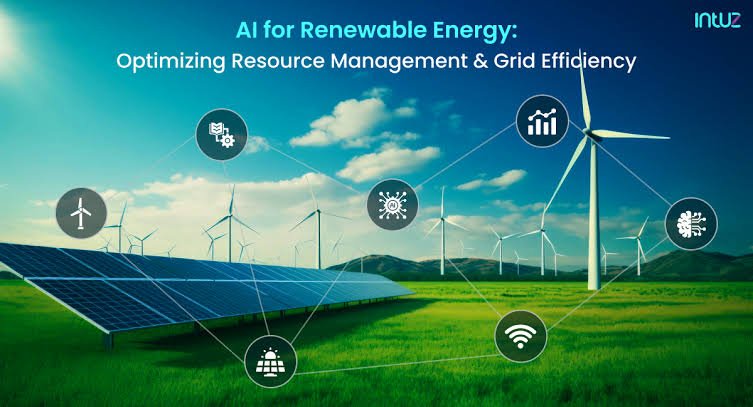
Solar energy has become one of the most promising solutions for meeting the world’s growing electricity needs while reducing dependence on fossil fuels. From residential rooftops to large-scale solar farms, photovoltaic systems are helping homes, businesses, and communities generate cleaner electricity. However, as solar power becomes more widespread, managing energy production, storage, and consumption efficiently has become increasingly important.
This is where artificial intelligence (AI) is making a difference. By analyzing weather forecasts, electricity consumption patterns, solar generation data, and equipment performance, AI-powered energy management systems can help users make smarter decisions about how and when electricity should be produced, stored, and used.
Traditional solar systems often rely on basic controls and fixed operating schedules. While these systems can generate electricity effectively, they may not always respond optimally to changing weather conditions, unexpected energy demand, or fluctuating electricity prices. AI introduces a more adaptive approach by using real-time information and historical data to improve energy management.
For homeowners, this can mean using more of their own solar electricity and potentially reducing electricity bills. For businesses and utilities, it can mean improving operational efficiency, identifying equipment problems earlier, and balancing renewable energy with electricity demand.
As solar installations become more connected and energy systems become increasingly digital, AI is expected to play a growing role in making renewable power more reliable, efficient, and cost-effective.
What Is Smart Energy Management?
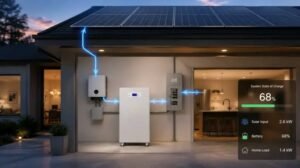
<AsyncImage query=”smart solar energy management system dashboard rooftop solar panels home battery inverter technology” aspectRatio=”16:9″ width=”100%”/>
Smart energy management refers to the use of digital technologies, sensors, connected devices, and automated controls to monitor and optimize how electricity is generated, stored, distributed, and consumed.
In a solar power system, smart energy management helps coordinate solar panels, inverters, batteries, household appliances, electric vehicle chargers, and sometimes the electricity grid.
Instead of simply generating electricity whenever sunlight is available, an intelligent system evaluates how that electricity can be used most effectively.
For example, a home may generate more solar electricity than it needs during the afternoon. A smart energy management system can direct the surplus toward charging a battery, running a water heater, or charging an electric vehicle. Later, when solar generation decreases, the stored electricity can help supply the household.
AI can make these decisions more effective by learning from historical patterns and responding to changing conditions.
A typical smart solar energy management system may include:
- Solar panels: Generate electricity from sunlight.
- Smart inverters: Convert electricity and provide information about system performance.
- Battery storage: Stores excess electricity for later use.
- Sensors and smart meters: Measure generation, consumption, and electricity flows.
- AI software: Analyzes data, forecasts future conditions, and recommends or automatically makes adjustments.
- Connected appliances: Allow selected devices to operate when solar electricity is available or electricity prices are favorable.
Not every smart solar system uses AI. Some systems rely on simple rules, timers, or conventional automation. AI becomes particularly useful when a system needs to predict future conditions, recognize complex patterns, or optimize several competing objectives at once.
How AI Works in Solar Power Systems
Artificial intelligence helps solar systems respond to changing conditions rather than relying entirely on fixed schedules.
The technology typically combines data collection, prediction, optimization, and automated control.
1. Collecting Real-Time Data
The first step is gathering information about the solar system and its surroundings.
Sensors, inverters, smart meters, weather services, and connected devices can provide information such as:
- Current solar electricity generation.
- Household or business electricity consumption.
- Battery charge levels.
- Local temperature and sunlight conditions.
- Weather forecasts and expected cloud cover.
- Electricity prices and grid demand, where available.
- Historical system performance.
This information gives the software a clearer picture of what is happening now and what may happen next.
The quality of the data matters. Faulty sensors, inaccurate forecasts, missing measurements, or communication failures can reduce the effectiveness of automated decisions.
2. Predicting Solar Energy Production
Solar generation changes with sunlight, temperature, cloud cover, shading, and seasonal conditions.
AI models can analyze historical production data alongside weather forecasts to estimate how much electricity a system is likely to generate over the coming hours or days.
For example, if forecasts indicate that heavy cloud cover will reduce solar output tomorrow afternoon, the system may preserve more battery energy overnight or postpone flexible electricity use until conditions improve.
Accurate forecasts are particularly useful for larger solar farms, commercial facilities, and households with batteries.
However, AI predictions are not perfect. Sudden weather changes and unusual conditions can still cause actual generation to differ from forecasts.
3. Understanding Electricity Consumption
AI can also analyze how a home or business uses electricity.
A system may identify that energy consumption rises in the morning, drops during working hours, and increases again in the evening.
Over time, it can use these patterns to estimate future demand and coordinate available solar energy more effectively.
For example, if a household typically charges an electric vehicle after returning home, the system may schedule charging earlier on a sunny day when excess solar electricity is available.
This reduces the need to purchase electricity from the grid, provided the charging schedule fits the driver’s requirements.
4. Making Smarter Energy Decisions
Once the system estimates future solar generation and electricity demand, an optimization algorithm can determine how to use the available energy.
Depending on the equipment and user preferences, it may decide whether to:
- Power appliances directly from solar panels.
- Charge a battery.
- Discharge stored energy.
- Export surplus electricity to the grid.
- Delay flexible appliances until a better time.
- Preserve battery capacity for a potential outage.
The best decision depends on the household’s priorities. A user focused on minimizing electricity costs may choose different settings from someone who prioritizes backup power or maximum use of renewable electricity.
AI helps coordinate these competing goals, but the system still needs clearly defined limits, safety protections, and user preferences.
Key Benefits of AI-Powered Solar Energy Management
AI can improve solar system performance in several practical ways. The results depend on the quality of the equipment, available data, electricity tariffs, and how the system is configured.
1. Improving Solar Energy Efficiency
One of the main advantages of intelligent energy management is making better use of the electricity a solar system generates.
AI can monitor performance data and identify unusual patterns that may indicate shading, equipment faults, unexpected energy losses, or declining output.
Some advanced systems can also help coordinate compatible equipment to improve overall energy use.
For example, if a commercial building regularly exports excess solar electricity during the afternoon while purchasing electricity in the evening, an intelligent control system may help shift flexible demand or charge a battery during periods of surplus generation.
The objective is not necessarily to make the solar panels themselves more efficient. Instead, it is to improve how effectively the entire energy system operates.
2. Reducing Electricity Bills
AI can help reduce electricity costs by coordinating solar generation, battery storage, and household consumption.
In locations with time-of-use electricity tariffs, prices may vary throughout the day. An intelligent system can use this information to decide when to charge or discharge a battery, subject to equipment limits and user preferences.
For example, a system may store surplus solar electricity during the afternoon and use it during an expensive evening period.
In some situations, it may be cheaper to charge a battery from the grid during a low-price period rather than reserve all charging for solar energy. Whether this is worthwhile depends on the tariff, battery efficiency, battery wear, and the user’s goals.
Savings are not guaranteed. A system must account for battery losses, installation costs, and any compensation the household would otherwise receive for exporting solar electricity.
3. Better Battery Management
<AsyncImage query=”residential solar battery storage inverter installed beside modern home energy management system” aspectRatio=”16:9″ width=”100%”/>
Battery storage is an important part of many modern solar installations, but managing it effectively requires balancing several considerations.
A battery should not simply charge or discharge whenever possible. Its operation can affect electricity costs, backup readiness, efficiency, and long-term battery health.
AI-assisted controls can estimate future energy demand and solar generation to determine when charging or discharging is most useful.
For instance, if a sunny afternoon is expected, a system may leave some battery capacity available to capture the upcoming solar surplus. If bad weather is forecast, it may preserve stored electricity for the evening.
Some systems can also use battery temperature, charging history, and operating data to identify conditions that require attention.
However, battery safety limits and manufacturer specifications must always take priority over optimization goals.
4. Predictive Maintenance
Solar panels and related equipment can experience problems such as inverter faults, damaged connections, shading, or reduced output.
Traditional maintenance often depends on scheduled inspections or someone noticing a drop in performance.
AI-based monitoring can compare actual performance with expected output and flag unusual changes for investigation.
For example, if one section of a solar farm produces less electricity than comparable sections under similar conditions, the software may identify the difference and alert an operator.
Predictive maintenance can help technicians investigate problems earlier, potentially reducing downtime and unnecessary inspection costs.
However, an alert does not always mean that equipment has failed. Weather changes, sensor errors, and other factors can also cause unexpected readings. Qualified technicians should verify significant faults before repairs are undertaken.
5. Supporting Greater Energy Independence
For homeowners who want to rely less on the electricity grid, AI can help coordinate solar panels, batteries, and energy-consuming devices.
The system can prioritize using locally generated electricity, preserve battery reserves, and manage flexible appliances according to available energy.
This can be particularly useful for households with electric vehicles, heat pumps, or other appliances that can operate at different times.
Nevertheless, greater energy independence depends on system size, battery capacity, weather conditions, and the home’s electricity requirements. AI cannot compensate for a solar array that consistently generates too little electricity to meet demand.
AI and Smart Solar Battery Storage
Battery storage is one of the areas where AI-powered energy management can deliver particularly useful results.
Solar panels often produce their highest output during daylight hours, while many households use more electricity in the evening. A battery can bridge this gap, and intelligent controls can help determine how much energy to store and when to use it.
Predicting Battery Requirements
AI can combine weather forecasts with historical electricity consumption to estimate how much energy the home may need later.
If high evening demand is expected, the system may reserve more stored energy. If substantial solar generation is forecast, it may prepare the battery to accept the additional electricity.
These decisions can be especially valuable for households with variable electricity use or changing energy prices.
Extending Battery Life
Battery lifespan is influenced by temperature, charging and discharging patterns, depth of discharge, and the battery’s chemistry.
AI-assisted energy management may help avoid unnecessary cycling and operate the battery within conditions recommended by its manufacturer.
For example, the system might avoid repeated small charging and discharging cycles when they provide little financial benefit.
It may also use temperature and battery management system data to identify abnormal operating conditions.
These strategies can support battery longevity, but they cannot eliminate normal aging or guarantee a particular service life.
Managing Backup Power
Some solar batteries can provide backup electricity during a grid outage when installed with compatible equipment.
An intelligent system can help maintain a selected reserve of energy for emergencies instead of using the entire battery for ordinary electricity consumption.
Homeowners can often choose how much stored energy to preserve, depending on their priorities.
Keeping a larger reserve may improve backup readiness but leave less energy available for routine bill savings.
AI-Powered Solar Forecasting: Why It Matters
Solar forecasting is important because energy management decisions often need to be made before the electricity is required.
Weather conditions can change quickly, and solar generation may fluctuate as clouds move across a site.
AI forecasting systems can combine several data sources, including satellite imagery, weather models, historical solar output, and local sensor measurements.
Short-Term Forecasting
Short-term forecasts estimate solar output over the next several minutes or hours.
They can help batteries and connected appliances respond to changing conditions. For example, a system may temporarily reduce battery discharge if solar generation is expected to recover soon.
Day-Ahead Forecasting
Day-ahead forecasts estimate production for the following day.
Utilities, energy traders, and large solar farm operators can use these estimates to plan electricity supply and manage grid operations.
Commercial buildings can also use forecasts to schedule energy-intensive activities or plan battery charging.
Seasonal Forecasting
Longer-term forecasts and historical patterns can help operators understand seasonal production trends.
These estimates are useful for planning maintenance, evaluating energy requirements, and assessing whether a system is appropriately sized.
Long-term forecasts are less precise about individual weather events, so they should be treated as planning tools rather than exact predictions.
The Role of AI in Smart Homes
AI-powered solar management is becoming increasingly relevant as more household appliances connect to digital energy platforms.
Smart homes can coordinate solar panels, batteries, electric vehicles, heating and cooling systems, and other devices to improve how electricity is used.
Smart Appliances
Compatible appliances can be scheduled to operate when solar electricity is readily available.
A dishwasher, washing machine, or water heater may be able to run during the middle of the day instead of during a more expensive evening period.
The system should still respect user preferences, appliance requirements, and practical scheduling limits.
Electric Vehicle Charging
Electric vehicles can consume substantial amounts of electricity, making charging schedules an important part of home energy management.
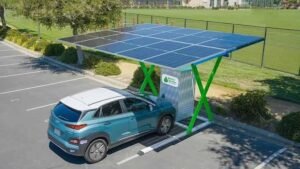
An AI-enabled system may adjust charging power according to solar output, household demand, electricity prices, and the time the vehicle needs to be ready.
For example, if a vehicle is parked at home during the day, charging can be increased when solar generation exceeds other household needs.
This can reduce grid electricity use without requiring the driver to manage every charging decision manually.
Smart Heating and Cooling
Heating and cooling systems can sometimes be adjusted to use electricity when solar production is high.
For example, a compatible heat pump may preheat a home or hot-water tank during a sunny period, within comfortable and safe operating limits.
The stored heat can then reduce the amount of electricity needed later.
Such strategies depend on the building’s insulation, thermal characteristics, equipment compatibility, and the household’s comfort requirements.
AI in Large-Scale Solar Farms
AI-powered energy management is not limited to residential systems. Utility-scale solar farms can also use intelligent software to improve generation, maintenance, and operational planning.
Large solar installations contain thousands or even millions of components, making manual monitoring difficult.
AI can help operators analyze information from inverters, weather stations, sensors, and other equipment to identify patterns across the site.
Optimizing Panel Performance
Some solar installations use tracking systems that move panels to follow the sun.
Intelligent controls can help coordinate tracking, monitor performance, and identify situations where equipment is not operating as expected.
However, solar tracking is not always the most economical choice. Fixed-tilt panels can be preferable where the additional energy output does not justify the extra equipment and maintenance.
Detecting Faults Across Large Installations
AI tools can compare the output of different panel strings, inverters, and sections of a solar farm.
If one section performs unusually poorly, the system can flag it for inspection.
This can help maintenance teams prioritize their work and reduce the time spent searching for problems.
Improving Grid Coordination
Large solar farms must operate within the technical requirements of the electricity grid.
AI-based forecasting and optimization can help operators estimate upcoming generation and coordinate available equipment with grid conditions.
However, grid stability also depends on other generators, transmission infrastructure, demand patterns, and grid-control systems. AI is one part of a broader operational framework rather than a complete solution on its own.
AI and Solar Energy Trading
Electricity prices can change throughout the day in markets where prices respond to supply and demand.
For businesses and large energy producers, these fluctuations can create opportunities to manage when electricity is consumed, stored, or exported.
AI systems can analyze price forecasts, expected solar generation, battery availability, and operating constraints to recommend or automate energy trading decisions.
For example, a battery operator may store electricity when prices are relatively low and discharge it when prices rise, provided the expected financial benefit exceeds losses and operating costs.
Solar generators may also use forecasting tools to improve their understanding of when electricity is likely to be available in the market.
These strategies require careful financial and technical planning. Electricity prices are uncertain, and automated decisions must follow applicable market rules and equipment constraints.
Challenges of Using AI in Solar Energy Management
Although AI offers significant potential, implementing it successfully involves several challenges.
1. Data Quality and Accuracy
AI systems depend on reliable data. Incorrect sensor readings, incomplete records, or inaccurate weather forecasts can lead to poor decisions.
Solar operators should use appropriate monitoring equipment and regularly check whether system measurements are consistent with actual performance.
2. Initial Costs
Advanced monitoring equipment, smart inverters, connected batteries, and AI software can increase the cost of a solar installation.
For some smaller systems, a conventional energy management system may provide sufficient benefits without requiring more sophisticated AI features.
The value of AI should be evaluated against the expected savings, maintenance benefits, and complexity it introduces.
3. Cybersecurity Risks
Connected solar systems can create additional cybersecurity concerns.
If monitoring platforms, inverter interfaces, or energy management systems are poorly secured, attackers may attempt to access operational information or interfere with system controls.
Users should apply security updates, use strong unique passwords, enable multifactor authentication when available, and limit remote access to trusted users and services.
Businesses operating large installations should also separate critical operational systems from ordinary office networks where appropriate.
4. Privacy Concerns
Smart energy systems may collect detailed information about household electricity consumption.
These patterns can sometimes reveal when residents are home, which appliances they use, and how their daily routines change.
Manufacturers and service providers should handle this information responsibly, explain what data they collect, and provide clear privacy controls.
Homeowners should review privacy policies and understand whether their data is shared with third parties.
5. Compatibility Between Devices
Not every solar inverter, battery, appliance, or energy management platform works with every other product.
Before purchasing an AI-enabled system, users should confirm that the required devices can communicate and that the software supports the intended functions.
Compatibility can affect battery control, backup operation, monitoring, and future system expansion.
6. Overreliance on Automation
AI predictions can be wrong, and automated systems can make decisions that do not match a user’s priorities if configured poorly.
Critical functions should have suitable safety protections, clear operating limits, and manual controls where appropriate.
Human oversight remains important, particularly for large installations, essential facilities, and systems that provide backup electricity.
How to Choose an AI-Powered Solar Energy Management System
Selecting the right system requires more than looking for a product advertised as intelligent or AI-enabled.
Consider the following factors before investing:
- Monitoring capabilities: Check whether the system provides useful information about solar generation, household demand, battery performance, and grid electricity use.
- Forecasting features: Determine whether it uses weather and consumption forecasts to improve energy scheduling.
- Equipment compatibility: Confirm that the platform works with your existing or planned panels, inverter, battery, and appliances.
- Automation options: Understand which decisions can be automated and which require manual approval.
- Battery controls: Look for configurable charging, discharge limits, and backup reserves where supported.
- Cybersecurity: Review software updates, access controls, authentication, and remote connectivity features.
- Privacy protections: Understand how household or business energy data is stored and shared.
- Costs and expected benefits: Compare the price of advanced features with the likely savings or operational improvements.
- Technical support: Choose a provider that offers clear documentation and dependable assistance.
A well-designed system should make energy management easier to understand, not force users to constantly troubleshoot complicated software.
The Future of AI in Solar Power Systems
The relationship between artificial intelligence and renewable energy is likely to become more important as electricity systems become increasingly connected.
Future energy management platforms may coordinate rooftop solar, home batteries, electric vehicles, heat pumps, and grid services through a single intelligent interface.
Improvements in forecasting may allow systems to respond more effectively to changing weather conditions and energy prices. Better monitoring tools may also help operators identify faults sooner and improve maintenance planning.
Another promising development is the growth of virtual power plants. These systems coordinate multiple distributed energy resources, such as household batteries and smart appliances, so they can collectively support electricity supply or respond to grid needs.
AI may help determine when participating devices should charge, discharge, or adjust consumption. The benefits depend on local regulations, available technology, participant agreements, and the compensation offered.
At the same time, future systems will need stronger cybersecurity protections, better interoperability, and clearer rules for handling energy data.
The long-term goal is not simply to make solar panels generate more electricity. It is to create an energy system in which renewable generation, storage, consumption, and grid operations work together more intelligently.
Conclusion
Smart energy management is changing how solar power systems are monitored, controlled, and integrated into everyday life. By analyzing real-time information, predicting solar generation, and learning from electricity consumption patterns, AI can help homeowners and businesses make better use of renewable energy.
Its benefits include improved battery management, potentially lower electricity bills, earlier detection of equipment problems, and more effective coordination of solar generation with household demand.
However, AI is not a magic solution. Its effectiveness depends on reliable data, suitable equipment, appropriate system design, and realistic expectations. Installation costs, cybersecurity, privacy, and compatibility also need careful consideration.
For homeowners, a smart energy management system can make it easier to use solar electricity when it is available and store excess energy for later. For businesses and utilities, AI can support more efficient operations and help manage the growing share of renewable electricity in the power system.
As solar technology continues to advance, intelligent energy management will likely become an increasingly valuable tool for improving the performance of renewable energy systems.
The real opportunity lies in combining clean energy generation with thoughtful automation, reliable storage, and responsible data management. Together, these technologies can help create a more efficient, flexible, and sustainable energy future.