Next-Generation Solar Panels: Innovations Making Clean Energy More Efficient
Introduction
As the world continues to search for cleaner and more sustainable energy sources, solar power has become one of the most promising solutions to growing energy demands. From residential rooftops to large-scale solar farms, solar panels are helping households, businesses, and communities reduce their dependence on traditional fossil fuels. However, as energy consumption increases and environmental concerns become more urgent, the need for more efficient and affordable solar technology is greater than ever.
Traditional solar panels have already made significant progress in converting sunlight into electricity, but they still face certain limitations. Factors such as energy conversion efficiency, weather conditions, installation costs, and available space can affect their performance. Researchers and manufacturers are therefore developing next-generation solar panels that aim to generate more electricity, last longer, and work in a wider range of environments.
Innovations such as perovskite solar cells, tandem solar technology, bifacial panels, flexible solar modules, and AI-powered energy management are changing the way solar energy is produced and used. These developments could make solar power more practical for homes, commercial buildings, transportation, and even portable electronic devices.
Understanding these technologies helps explain how solar energy is evolving and why the next generation of solar panels could play an important role in building a cleaner energy future.
What Are Next-Generation Solar Panels?
Next-generation solar panels are advanced photovoltaic technologies designed to improve the performance, versatility, durability, or affordability of solar energy systems.
Most conventional solar panels use crystalline silicon to convert sunlight into electricity. When sunlight reaches the solar cells, it transfers energy to electrons within the semiconductor material, producing an electric current that can be used to power electrical devices.
Silicon technology has become highly developed and widely adopted. However, researchers are exploring new materials, cell designs, and manufacturing techniques to overcome existing limitations and improve overall performance.
Some advanced panels aim to capture more energy from the sunlight that reaches them. Others are designed to generate electricity from both sides, operate on curved surfaces, or integrate directly into building materials.
The goal is not simply to make solar panels more powerful. It is also to make solar energy easier to install, more affordable to maintain, and more effective in different environments.
Why Solar Panel Innovation Matters
Solar power has expanded rapidly because sunlight is widely available and solar systems can be installed at different scales. Nevertheless, several challenges still influence how effectively solar energy can meet electricity demand.
1. Improving Energy Conversion Efficiency
Solar panel efficiency measures how much of the sunlight reaching a panel is converted into electricity.
Higher efficiency means a panel can generate more electricity from a given area under comparable conditions. This is particularly valuable for homes and businesses with limited roof space.
For example, a household with a small roof may benefit from higher-efficiency panels because they can produce more power without requiring additional installation space.
However, efficiency is not the only factor that matters. The total energy generated over a panel’s lifetime, its purchase price, installation costs, and local sunlight conditions also influence its overall value.
2. Reducing Installation and Operating Costs
The cost of a solar energy system includes more than the panels themselves. Installation, electrical equipment, mounting structures, labor, maintenance, and permitting can all affect the final price.
New manufacturing processes and improved system designs may help reduce some of these costs.
More efficient panels can also reduce the number of modules needed to reach a particular power target, potentially lowering mounting and installation requirements.
3. Expanding Solar Energy to New Environments
Traditional rigid solar panels work well on many rooftops and open areas, but they are not suitable for every surface or application.
Flexible solar cells, lightweight modules, and building-integrated photovoltaic materials could expand the range of places where solar electricity can be generated.
These technologies may allow solar energy to be incorporated into vehicle roofs, portable equipment, building facades, and structures that cannot support conventional panels.
4. Supporting a Cleaner Energy System
Solar power produces electricity without direct emissions during operation. As electricity generation shifts toward renewable sources, solar energy can help reduce dependence on fossil fuels.
However, solar panels still have environmental impacts associated with manufacturing, transportation, mining, and disposal. Improving durability, reducing material waste, and developing better recycling methods are therefore important parts of making solar technology more sustainable.
1. Perovskite Solar Cells: A Promising New Material
<AsyncImageGroup query={[“perovskite solar cell laboratory research thin film photovoltaic”,”perovskite solar cell material layered photovoltaic research”]} aspectRatio=”5:4″ layout=”bento” size=”lg”/>
One of the most exciting developments in solar technology is the use of perovskite materials.
Perovskites are a family of materials with a particular crystal structure that can absorb sunlight effectively. Certain perovskite compounds have properties that make them promising for photovoltaic applications.
Unlike conventional silicon solar cells, which require substantial high-temperature processing and carefully controlled manufacturing, some perovskite solar cells can be produced using lower-temperature techniques.
This creates opportunities for potentially lower manufacturing costs and new product designs.
How Perovskite Solar Cells Work
Perovskite solar cells absorb sunlight and convert its energy into electrical charge. Their composition can be adjusted to influence how they absorb different parts of the solar spectrum.
This flexibility makes them attractive for research into high-efficiency solar devices.
Perovskites can also be deposited as thin layers, creating possibilities for lightweight or semi-transparent photovoltaic materials.
Why Are They Important?
Perovskite solar cells have achieved impressive results in laboratory research, attracting significant interest from scientists and solar manufacturers.
Their potential advantages include:
- Strong light absorption.
- Potentially lower-temperature manufacturing.
- Flexible material and device designs.
- Compatibility with silicon cells in tandem configurations.
Despite this promise, important challenges remain. Some perovskite materials degrade when exposed to moisture, heat, oxygen, or prolonged illumination. Researchers are working to improve their stability, manufacturing consistency, and long-term performance.
Some perovskite formulations also contain lead, which raises concerns about material containment, recycling, and environmental safety.
As a result, laboratory efficiency alone is not enough to establish commercial success. Solar cells must also demonstrate reliable performance over many years in real-world conditions.
2. Tandem Solar Cells: Capturing More of the Sun’s Energy
<AsyncImage query=”silicon perovskite tandem solar cell layered structure laboratory photovoltaic research” aspectRatio=”16:9″ width=”100%”/>
Tandem solar cells are designed to improve efficiency by combining two or more photovoltaic layers that absorb different parts of the solar spectrum.
Conventional silicon cells cannot convert every wavelength of sunlight into electricity with equal effectiveness. Some energy is lost because photons have more energy than the cell can use, while other photons do not have enough energy to be absorbed.
Tandem technology addresses this limitation by placing different solar cell materials together so that they can capture a broader range of sunlight.
How Tandem Technology Works
A perovskite-silicon tandem cell combines a perovskite layer with a conventional silicon cell.
The perovskite layer can absorb higher-energy portions of sunlight, while the silicon layer converts additional light into electricity.
When designed properly, this arrangement can produce more power from the same incoming sunlight than a comparable single-junction cell.
Other tandem configurations are also being researched, although not all are equally mature or commercially available.
Benefits of Tandem Solar Panels
The main advantage is the potential to achieve higher efficiency without increasing the amount of space available for solar panels.
This can be especially useful for rooftops, commercial buildings, and solar installations where land or mounting space is limited.
Higher efficiency may also reduce certain balance-of-system costs because fewer panels could be needed to achieve a target output.
Challenges Ahead
Tandem cells are more complex to manufacture than conventional silicon cells. Manufacturers must ensure that the layers remain stable, work together efficiently, and can be produced consistently at commercial scale.
Long-term reliability, production costs, and compatibility with existing manufacturing equipment remain important considerations.
As manufacturing processes improve, tandem technology could become an increasingly important part of the high-efficiency solar market.
3. Bifacial Solar Panels: Generating Electricity From Both Sides
<AsyncImage query=”bifacial solar panels utility scale solar farm sunlight reflected from ground rear side” aspectRatio=”16:9″ width=”100%”/>
Traditional solar panels primarily capture sunlight on their front surface. Bifacial solar panels are designed to generate electricity from both the front and rear sides.
The rear side can capture sunlight reflected from the ground or other nearby surfaces. This additional light can increase the total energy produced by a solar installation.
How Bifacial Panels Improve Performance
Bifacial panels are often installed above reflective or light-colored surfaces. Sunlight reflected from those surfaces reaches the rear of the panel and contributes to electricity generation.
Their performance depends on several factors, including mounting height, ground reflectivity, panel spacing, shading, and the amount of sunlight reaching the rear surface.
For example, a bifacial installation above a light-colored surface may receive more reflected light than one installed close to dark soil.
Advantages of Bifacial Technology
Bifacial panels can increase energy generation without requiring an equivalent increase in the installation’s footprint.
They are particularly useful for some utility-scale solar farms, commercial installations, and elevated mounting structures.
However, the additional energy yield varies by location and system design. Bifacial panels are not automatically the best choice for every rooftop, especially when their rear surfaces are blocked by mounting structures or placed close to an opaque roof.
4. Flexible and Lightweight Solar Panels
<AsyncImageGroup query={[“flexible thin film solar panels curved surface installation”,”lightweight flexible photovoltaic solar film portable application”]} aspectRatio=”5:4″ layout=”bento” size=”lg”/>
Not every building, vehicle, or portable device can support conventional rigid solar panels. Flexible solar technology aims to address this limitation by using thin-film materials or lightweight photovoltaic structures.
Depending on the design, these panels may bend around curved surfaces or weigh considerably less than conventional glass-and-frame modules.
Where Can Flexible Solar Panels Be Used?
Potential applications include:
- Recreational vehicles and boats.
- Portable charging equipment.
- Lightweight structures and temporary installations.
- Certain building surfaces that cannot support conventional modules.
- Specialized transportation and remote monitoring equipment.
Flexible solar products can be especially useful where weight and shape matter more than achieving the highest possible efficiency per square meter.
Are Flexible Panels Better Than Traditional Panels?
Not necessarily.
Some flexible products have lower efficiency or shorter expected lifespans than conventional crystalline silicon modules. They may also be more sensitive to heat, mechanical stress, or environmental exposure, depending on their materials and construction.
Consumers should evaluate the manufacturer’s performance specifications, durability testing, warranty, and installation requirements rather than assuming that flexibility automatically means better performance.
5. Transparent Solar Panels and Solar Windows
<AsyncImage query=”building integrated photovoltaics transparent solar glass modern office building windows” aspectRatio=”16:9″ width=”100%”/>
Buildings use large amounts of glass for windows, skylights, and facades. Transparent or semi-transparent photovoltaic technology aims to turn some of these surfaces into electricity-generating components.
This approach is part of a broader field known as building-integrated photovoltaics, or BIPV.
Instead of attaching conventional solar panels to a building, photovoltaic materials can be incorporated into certain construction elements.
How Solar Windows Work
Some solar glazing technologies use photovoltaic materials that absorb selected wavelengths of light while allowing some visible light to pass through.
Other approaches use semi-transparent solar cells or specially designed glazing systems.
The resulting electricity can help power building systems, although the amount generated depends on the material, window orientation, transparency, and available sunlight.
Benefits for Modern Buildings
Solar windows and photovoltaic facades could allow buildings to generate electricity without requiring every solar installation to occupy a conventional rooftop.
They may be especially useful in urban areas with tall buildings and limited roof space.
However, transparent photovoltaic products generally face trade-offs between electricity generation, transparency, cost, and appearance. Their performance and commercial availability vary widely.
For many buildings, conventional rooftop solar remains the more straightforward option. Building-integrated technology becomes more attractive when it can be incorporated into a new construction project or planned renovation.
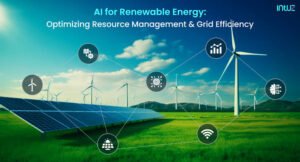
6. AI-Powered Solar Energy Management
<AsyncImage query=”solar farm monitoring control room energy analytics digital dashboard photovoltaic panels” aspectRatio=”16:9″ width=”100%”/>
Improvements in solar efficiency are not limited to the photovoltaic cells themselves. Artificial intelligence and data analytics are also helping operators manage solar installations more effectively.
Solar electricity production changes throughout the day because of sunlight, clouds, temperature, shading, and seasonal conditions. AI-assisted systems can analyze historical performance and current environmental data to improve monitoring and operational decisions.
Predicting Solar Energy Production
Machine learning models can analyze weather forecasts, historical electricity generation, and local environmental conditions to estimate how much energy a solar installation is likely to produce.
These predictions can help utilities plan electricity supply and help businesses schedule energy-intensive activities.
Forecasting does not increase the physical efficiency of a solar cell, but it can improve how effectively the resulting electricity is managed.
Identifying Maintenance Problems
Solar installations contain many panels, electrical connections, inverters, and monitoring devices.
AI-assisted monitoring can identify unusual patterns that may indicate shading, equipment faults, reduced output, or developing maintenance issues.
Early detection can help operators investigate problems before they cause larger losses.
Improving Energy Storage
Solar systems paired with batteries can store excess electricity for use when sunlight is limited or energy demand is high.
Intelligent energy management systems can help determine when to charge batteries, when to use stored energy, and when to draw electricity from the grid.
The actual savings depend on electricity tariffs, battery capacity, local regulations, and household or business energy use.
By combining solar generation, storage, forecasting, and monitoring, AI can help improve the overall value of a solar energy system.
7. Advanced Solar Tracking Systems
<AsyncImage query=”single axis solar tracking system utility scale photovoltaic panels rotating toward sunlight” aspectRatio=”16:9″ width=”100%”/>
Solar panels generate electricity when sunlight reaches their surfaces. Fixed panels are installed at a chosen angle, but the sun changes position throughout the day.
Solar tracking systems address this by moving panels to follow the sun’s apparent movement.
Single-Axis and Dual-Axis Tracking
Single-axis trackers generally rotate panels along one axis, allowing them to follow the sun’s daily movement.
Dual-axis trackers can adjust in two directions, helping maintain a favorable orientation as the sun’s position changes.
Tracking systems can increase energy generation compared with fixed installations, although the benefit depends on the location, weather, panel layout, and tracking design.
What Are the Trade-Offs?
Tracking systems require additional equipment, installation work, and maintenance. Moving parts can also introduce mechanical failure risks.
They are therefore more common in some large-scale solar farms than on residential rooftops.
For many homes, fixed rooftop panels provide a simpler and more economical solution. For suitable commercial and utility-scale projects, tracking can improve overall energy production enough to justify the additional investment.
8. Advanced Solar Materials and Manufacturing
Beyond perovskites and tandem cells, researchers are investigating other materials and manufacturing methods that could improve solar performance or reduce production costs.
Thin-film photovoltaic technologies, for example, use semiconductor layers that can be much thinner than traditional silicon wafers. Different thin-film materials offer different combinations of efficiency, weight, manufacturing complexity, and environmental considerations.
Manufacturers are also improving silicon cell designs, electrical contacts, surface treatments, and production processes.
These improvements may seem small individually, but incremental advances can make a significant difference when applied across millions of solar modules.
Why Manufacturing Matters
A solar technology must be more than efficient in a laboratory. It needs to be produced reliably, installed safely, and maintained economically over many years.
Manufacturers must consider material availability, production yields, supply chain reliability, environmental impacts, and recycling requirements.
The most successful technologies will be those that combine strong performance with dependable manufacturing and competitive lifetime costs.
9. Solar Panels Combined With Energy Storage
<AsyncImage query=”residential rooftop solar panels with home battery energy storage system” aspectRatio=”16:9″ width=”100%”/>
Solar panels produce electricity when sunlight is available, but household and business energy demand does not always follow the same schedule.
Battery storage helps address this mismatch by storing electricity for later use.
For example, a home may generate more solar power than it needs during the middle of the day. A battery can store some of that excess energy for use during the evening, depending on the system’s configuration and available capacity.
Benefits of Solar Plus Storage
Combining solar panels with batteries can help households and businesses:
- Use more of the electricity they generate themselves.
- Reduce reliance on grid electricity during selected periods.
- Maintain limited backup power during some outages, when the system is designed for backup operation.
- Manage electricity consumption according to time-based pricing.
However, batteries add cost and have their own environmental footprint. They also have capacity limits and may lose performance over time.
A solar-plus-storage system should therefore be sized according to actual electricity use, local tariffs, backup requirements, and budget.
It is also important to understand that ordinary grid-connected solar systems often shut down during a grid outage for safety reasons. Backup power requires compatible equipment and suitable system design.
10. Challenges Facing Next-Generation Solar Panels
Despite the exciting progress in solar research, several challenges must be addressed before every emerging technology becomes widely available.
High Initial Costs
Some advanced solar technologies remain expensive because they require specialized materials, manufacturing equipment, or installation methods.
Even when a panel is highly efficient, the overall system may not offer the best financial return if its purchase price is too high.
Long-Term Durability
Solar panels are expected to operate for decades. Emerging technologies must demonstrate that they can maintain performance through repeated exposure to heat, moisture, ultraviolet radiation, and changing weather conditions.
Long-term field testing is essential for determining whether laboratory results translate into reliable real-world performance.
Manufacturing at Scale
Laboratory prototypes may perform exceptionally well, but producing millions of consistent, high-quality cells is a different challenge.
Manufacturers must improve production yields, secure materials, and develop processes that are economical at commercial scale.
Recycling and Environmental Impact
Solar panels require materials, energy, transportation, and manufacturing resources. Some emerging technologies also raise specific concerns about the use of certain chemicals or metals.
Recycling systems and responsible material management will become increasingly important as the number of retired panels grows.
A sustainable solar industry must consider the entire lifecycle of its products, from raw material extraction to end-of-life processing.
Weather and Location
No solar panel performs equally well in every environment.
Cloud cover, high temperatures, shading, dust, snow, roof orientation, and installation angle can all affect energy production.
Choosing the right technology requires an assessment of local conditions rather than simply selecting the panel with the highest advertised efficiency.
How to Choose the Right Solar Technology
With so many solar innovations emerging, choosing a system can feel complicated. The best option depends on the property, energy requirements, available space, and financial priorities.
Consider the following factors before making a decision.
- Efficiency: If roof space is limited, higher-efficiency panels may help generate more electricity from the available area.
- Total cost: Compare equipment, installation, maintenance, and expected energy savings rather than focusing only on the price of individual panels.
- Warranty and durability: Look for clear product and performance warranties, along with evidence of reliable operation.
- Local conditions: Consider sunlight levels, shading, roof direction, temperature, and weather exposure.
- Energy storage needs: Determine whether batteries are useful for your energy consumption patterns, electricity rates, or backup requirements.
- Manufacturer reliability: Review the company’s track record, product documentation, service arrangements, and warranty support.
- Future maintenance: Consider cleaning requirements, inverter replacement, system monitoring, and access to qualified installers.
Homeowners should also compare expected annual energy production rather than relying only on a panel’s rated power. A well-designed system using established technology may offer better lifetime value than a more experimental product with uncertain durability.
The Future of Solar Energy
The future of solar power will likely depend on several technologies working together rather than one invention replacing everything that came before it.
High-efficiency silicon panels will continue to play an important role, while tandem cells may offer additional performance gains as manufacturing improves. Bifacial panels, solar tracking, flexible photovoltaic materials, and building-integrated solar systems will expand the range of possible applications.
AI-assisted monitoring and battery storage will also help solar systems become more useful by improving maintenance, forecasting, and energy management.
At the same time, governments, researchers, and manufacturers will need to address costs, durability, supply chains, and recycling.
Another important development is the integration of solar energy into wider electricity systems. Smart grids, energy storage, demand management, and other renewable sources can help balance fluctuations in solar generation.
As these technologies improve, solar power could become an even more important source of affordable, low-emission electricity for homes, businesses, and communities around the world.
Conclusion
Next-generation solar panels represent an important step toward making clean energy more efficient, flexible, and accessible. Innovations such as perovskite solar cells, tandem technology, bifacial panels, flexible modules, and solar windows are expanding the possibilities of photovoltaic power.
At the same time, AI-powered monitoring, advanced tracking systems, and battery storage are helping solar installations produce and manage electricity more effectively.
Although challenges involving cost, durability, manufacturing, and recycling remain, continued research and commercial development are improving the prospects for these technologies.
The transition to cleaner energy will not depend on solar panels alone. It will also require effective energy storage, modern electricity networks, responsible manufacturing, and thoughtful planning.
Ultimately, the greatest potential of next-generation solar technology lies in its ability to turn more available sunlight into useful electricity while making renewable energy practical for a wider range of people and applications. With continued innovation and responsible implementation, solar power can play an increasingly important role in building a more sustainable energy future.